CARDS · SAFARIS · CONSERVATION

Collect Uganda.
Explore Uganda.

Collect the wildlife. Learn its story. Then travel with Muzunguka Safaris to experience it in the wild.

Every Card Is the Beginning of a Safari.

✣   10 themed decks  •  520 cards  •  Made in Uganda

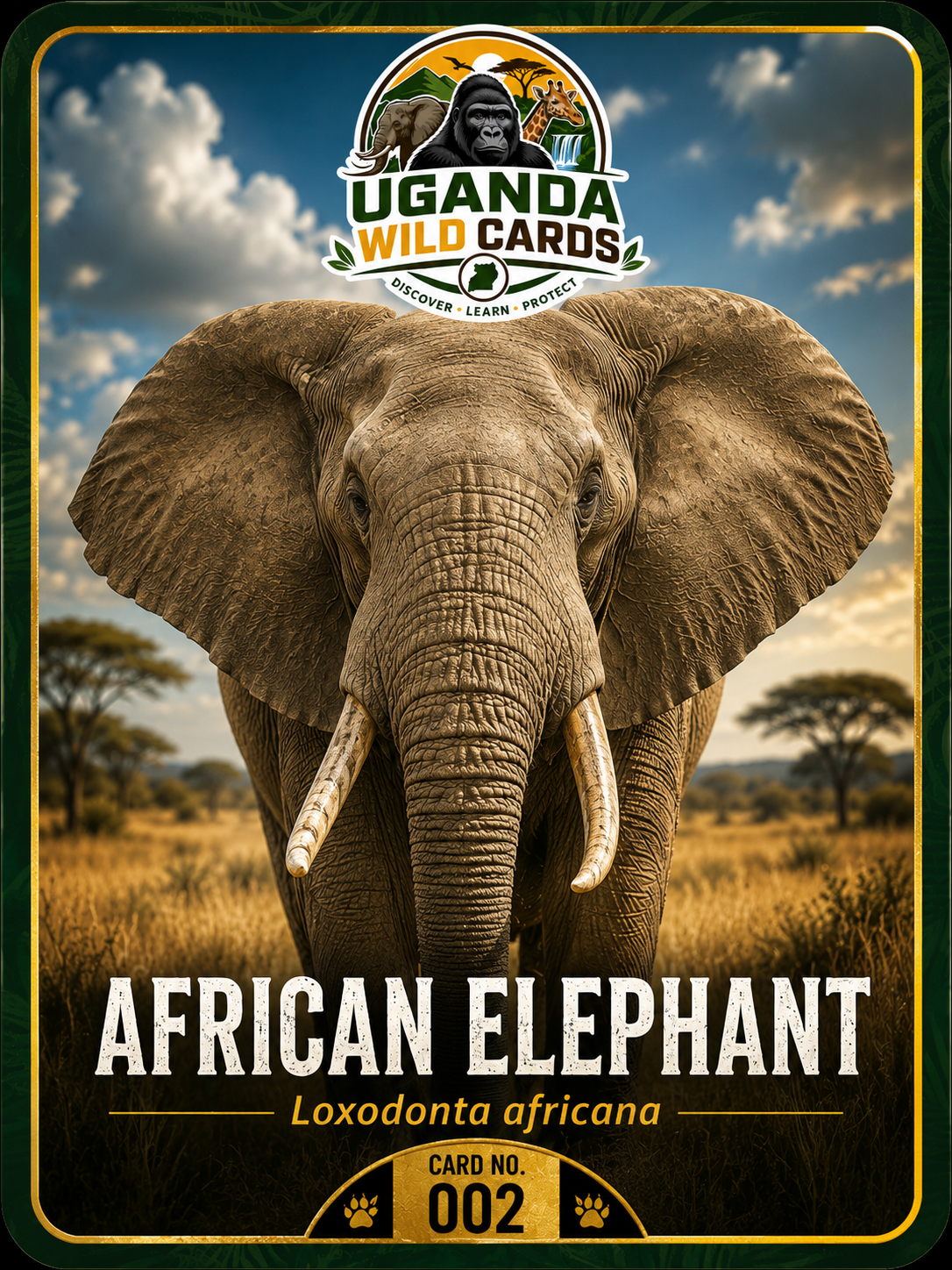
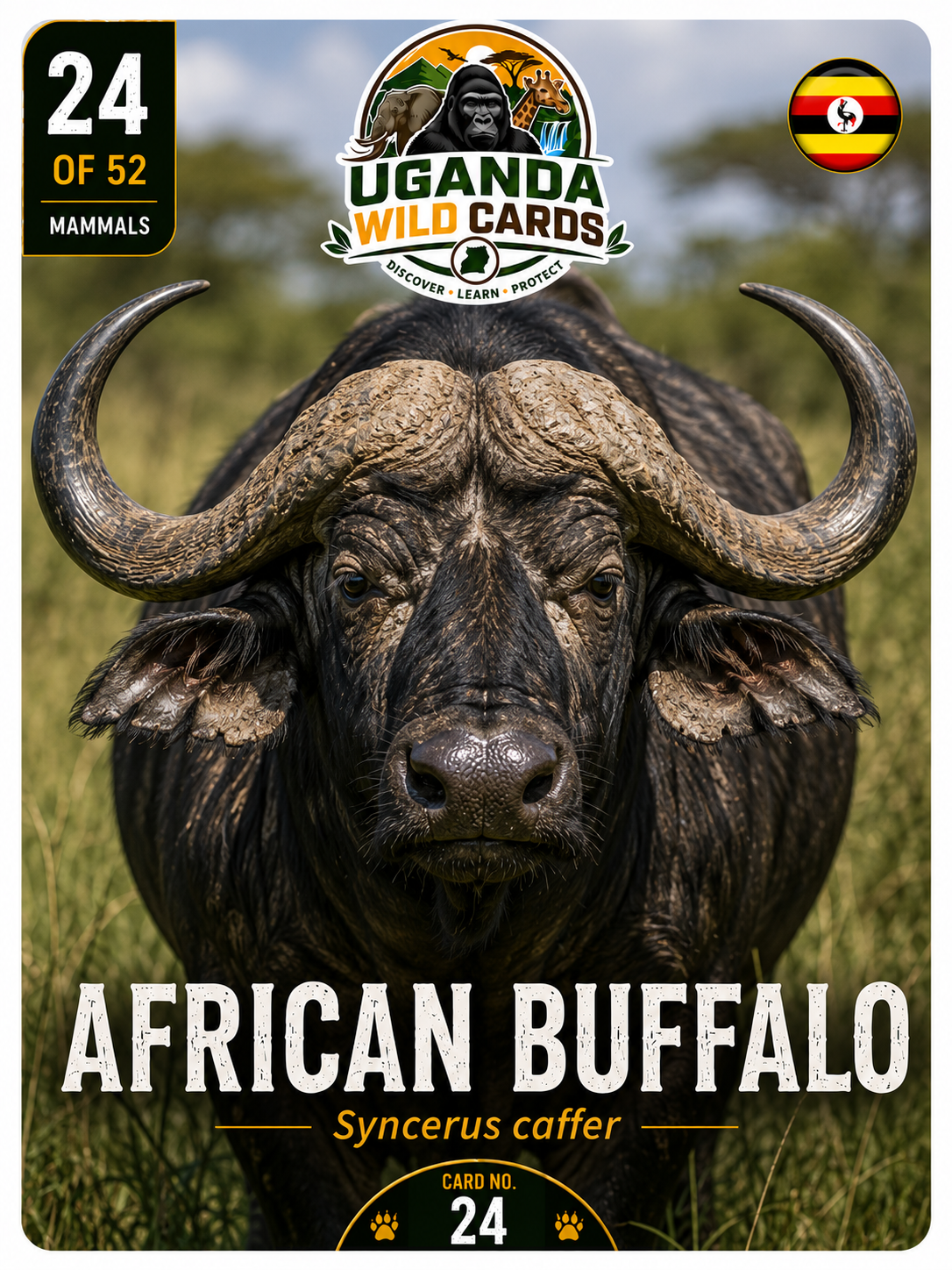
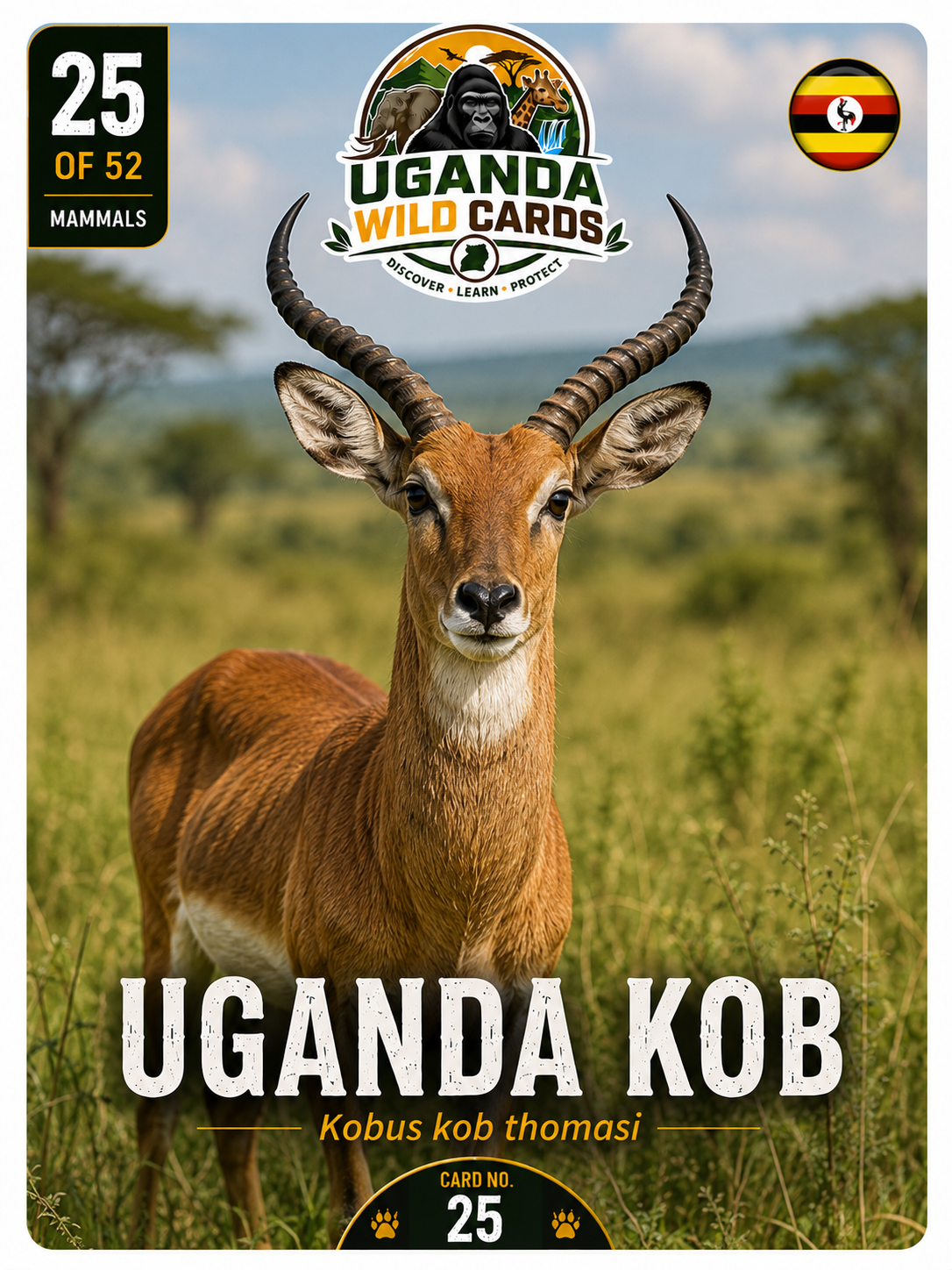
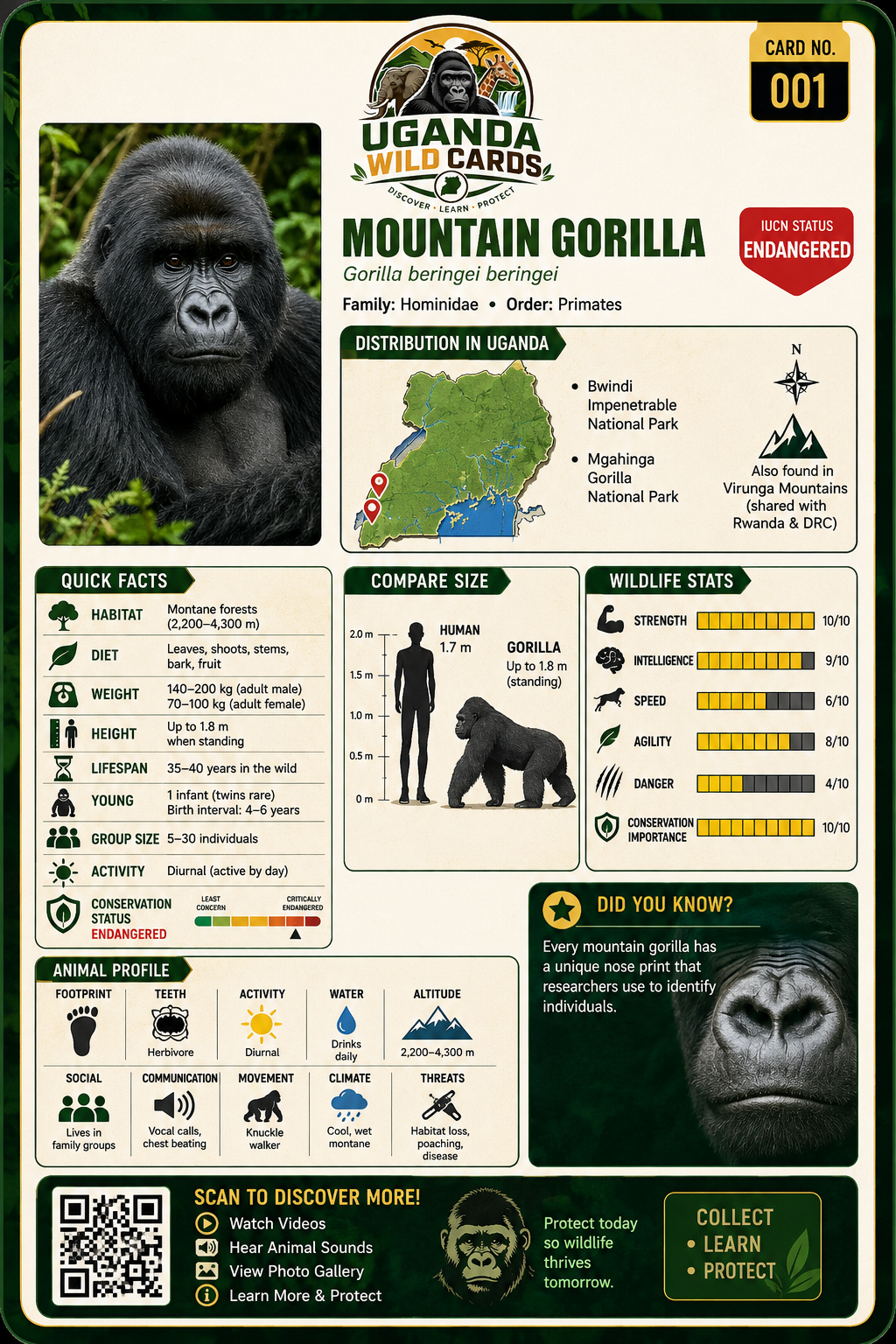
Mountain Gorilla Uganda Wild CardAfrican Elephant Uganda Wild CardAfrican Buffalo Uganda Wild CardUganda Kob Uganda Wild Card
SCROLL TO EXPLORE

A POCKET-SIZED SAFARI

More than a deck.
A journey through Uganda.

Uganda Wild Cards transforms wildlife education into something beautiful, playful and easy to carry. Every 3 × 4 inch card brings one remarkable species to life.

Created for curious children, families, teachers, tourists and collectors—each deck is an invitation to know Uganda and protect what makes it wild.

10Themed decks
52Cards in every deck
520Cards across the collection
1Unforgettable Uganda

THE COMPLETE VISION

10 collections. 520 cards.
One remarkable country.

Uganda Wild Cards is building a proudly Ugandan library of ten educational and collectible decks. Each 52-card collection brings Uganda’s wildlife, birds, natural wonders and living heritage to life through beautiful images, clear facts and interactive QR discovery.

10 themed collections52 cards in every deck520 cards in the complete library
COLLECTION ROADMAP

First edition: Wild Animals

Coming next: Birds of Uganda

01First edition
Elephant, lion, giraffe and Uganda kob representing Uganda's wild animals

Wild Animals

Uganda’s wild mammals range from powerful African elephants and lions to mountain gorillas, giraffes, Uganda kobs, pangolins, bats and tiny shrews. The collection introduces their appearance, behaviour, diet, habitat and place within the food web.

Learn from this collection

Mammals can be grouped by how they live and feed. Herbivores such as buffaloes, giraffes and antelopes eat plants; carnivores such as lions, leopards and hyenas hunt or scavenge; omnivores use both plant and animal foods. Primates, rodents and insect-eating mammals add further diversity.

Different habitats support different communities. Savannahs favour grazers and their predators, forests shelter primates and forest antelopes, wetlands support sitatunga and otters, while caves and woodlands provide homes for bats and smaller nocturnal species.

The deck also teaches conservation. Habitat loss, wildlife trafficking, snares, conflict with people and climate pressure affect many species. Protected areas, wildlife laws, responsible tourism and community participation help keep Uganda’s mammals alive.

52EDUCATIONAL
COLLECTIBLE CARDS
02Coming next
Shoebill and Grey Crowned Crane in a Ugandan papyrus wetland

Birds of Uganda

Uganda lies where several African habitats meet, giving it exceptional bird diversity. The collection introduces celebrated species such as the Shoebill and Grey Crowned Crane alongside many forest, wetland, savannah, mountain and garden birds.

Learn from this collection

Birds of prey include eagles, hawks, kites, falcons, vultures and owls. Their hooked bills, strong feet and sharp eyesight help them hunt or scavenge. They also keep ecosystems healthier by controlling prey populations and removing carrion.

Waterbirds and waders include herons, egrets, storks, ibises, ducks, geese, jacanas, kingfishers and shorebirds. Long legs, spreading toes, spear-like bills or swimming feet reveal how each group is adapted to papyrus swamps, lakes, rivers and muddy shores.

Forest specialists, colourful turacos, bee-eaters, hornbills, sunbirds, weavers and savannah birds demonstrate other ways of life. The cards also explore calls, nests, migration and threats such as wetland drainage, tree loss, poisoning and illegal capture.

52EDUCATIONAL
COLLECTIBLE CARDS
03Planned
Nile crocodile, chameleon and tortoise representing Uganda's reptiles

Reptiles

Uganda’s reptiles include Nile crocodiles, snakes, lizards, chameleons, geckos, skinks, tortoises and freshwater turtles. Their dry scales and reliance on external warmth distinguish them from mammals and birds.

Learn from this collection

Snakes may be venomous or non-venomous, but most avoid people and play important ecological roles by controlling rodents and other prey. Lizards range from fast ground dwellers to tree-climbing chameleons with gripping feet, independently moving eyes and specialised tongues.

Crocodiles are powerful aquatic predators, while tortoises and turtles carry protective shells and generally live very different lives on land or in water. Reptile habitats include rivers, wetlands, forests, rocky hills, savannahs and even gardens.

Fear and misunderstanding often lead to unnecessary killing. The collection teaches safe distance, correct identification and respect: never handle an unknown reptile, never disturb nests, and contact trained wildlife authorities when removal is necessary.

52EDUCATIONAL
COLLECTIBLE CARDS
04Planned
Butterfly, beetle, bee and dragonfly among tropical Ugandan plants

Insects

Insects have six legs and bodies divided into head, thorax and abdomen. Uganda’s enormous variety includes butterflies, moths, bees, wasps, ants, beetles, grasshoppers, mantises, termites, flies and dragonflies.

Learn from this collection

Pollinators such as bees, butterflies and some flies move pollen between flowers, supporting wild plants and crops. Decomposers, including many beetles and termites, break down dead material and return nutrients to the soil.

Predatory insects such as dragonflies and praying mantises help control other invertebrates. Social insects—including ants, bees and termites—build organised colonies in which different members perform specialised work.

Insects can also affect people through crop damage or disease transmission, but treating every insect as harmful is a mistake. Protecting native plants, reducing unnecessary pesticide use and conserving wetlands and forests safeguards the beneficial majority.

52EDUCATIONAL
COLLECTIBLE CARDS
05Planned
Ugandan lake, river, forests, fertile hills and mountains

Natural Resources

Natural resources are the materials and living systems people depend upon. Uganda’s freshwater, fertile soils, forests, wetlands, wildlife, minerals, sunshine and scenic landscapes support food, energy, jobs, culture and tourism.

Learn from this collection

Renewable resources can recover when managed carefully. Water cycles, forests, fisheries and productive soils may continue supporting future generations, but pollution, overharvesting and poor land use can damage them faster than they regenerate.

Non-renewable resources such as petroleum and mineral deposits form over geological time and cannot be quickly replaced. Their extraction requires careful planning, transparent governance and protection of communities, water sources and biodiversity.

The collection connects resources with responsibility. Conservation is not about refusing all use; it is about balancing today’s needs with restoration, efficiency, fairness and the rights of future generations.

52EDUCATIONAL
COLLECTIBLE CARDS
06Planned
Mountain gorilla, chimpanzee and golden monkey in a Ugandan rainforest

Primates

Uganda’s primates include mountain gorillas, chimpanzees, golden monkeys, colobus monkeys, mangabeys, baboons, guenons, patas monkeys and nocturnal galagos. They differ greatly in size, diet, movement and social organisation.

Learn from this collection

Great apes such as gorillas and chimpanzees have no tails and show complex learning, communication and family relationships. Monkeys may leap through forest canopies, travel on the ground or combine both, while galagos are adapted for life after dark.

Fruit-eating primates spread seeds and help forests regenerate; leaf-eaters influence vegetation; insect-eaters help control invertebrates. Their presence can reveal much about the health and connectedness of forest ecosystems.

Habitat fragmentation, disease transmission, snares and illegal trade threaten primates. Responsible tracking requires permits, trained guides, viewing distances, limited group sizes and strict health rules that protect both visitors and animals.

52EDUCATIONAL
COLLECTIBLE CARDS
07Planned
Nile perch and freshwater life in a Ugandan papyrus wetland

Aquatic Life

Uganda’s lakes, rivers, crater lakes and wetlands support fish, frogs, toads, aquatic insects, molluscs, crustaceans and countless microscopic organisms. Together they form freshwater food webs on which wildlife and people depend.

Learn from this collection

Fish can be grouped by habitat and feeding behaviour. Species may live near the surface, in open water, among rocks, along vegetated shores or close to the bottom, feeding on plants, plankton, insects, smaller fish or mixed foods.

Amphibians begin life in water and usually transform into air-breathing adults, making them sensitive indicators of environmental change. Dragonfly larvae, snails and other small creatures recycle nutrients and feed fish, birds and amphibians.

Pollution, invasive species, wetland loss, destructive fishing and overharvesting can upset aquatic systems. Cleaner catchments, protected breeding areas, responsible fishing and healthy papyrus wetlands support biodiversity, food security and livelihoods.

52EDUCATIONAL
COLLECTIBLE CARDS
08Planned
Indigenous Ugandan tree, medicinal plants, ferns and flowers

Trees & Plants

Plants capture sunlight to make food and form the foundation of most ecosystems. Uganda’s vegetation includes tropical forest trees, savannah grasses, acacias, papyrus, palms, bamboo, alpine plants, ferns, orchids and many flowering herbs.

Learn from this collection

Plant groups reproduce in different ways. Flowering plants produce seeds enclosed within fruits, conifers bear cones, while ferns and mosses reproduce through spores. Their roots, stems and leaves show adaptations to water, light, fire, altitude and grazing.

Trees store carbon, hold soil, shade rivers and provide nesting places, fruit, leaves and shelter. People also depend on plants for food, medicine, fibres, building materials, ceremonies and crafts such as barkcloth made from the Mutuba tree.

Not every introduced plant is harmful, but invasive species can spread aggressively and displace native vegetation. Protecting indigenous habitats, planting suitable native trees and harvesting medicinal plants carefully help preserve botanical knowledge and biodiversity.

52EDUCATIONAL
COLLECTIBLE CARDS
09Planned
Ugandan national park landscape with waterfall, savannah and wildlife

National Parks

Uganda’s ten national parks protect remarkably different landscapes: savannah, rainforest, wetlands, volcanoes, snow-capped mountains, river gorges and semi-arid wilderness. Each park has its own wildlife, communities and conservation story.

Learn from this collection

Savannah parks include Murchison Falls, Queen Elizabeth, Kidepo Valley and Lake Mburo. Forest and primate destinations include Bwindi, Kibale and Mgahinga, while Rwenzori Mountains, Mount Elgon and Semuliki protect distinctive highland and lowland ecosystems.

National parks conserve habitats and create opportunities for research, education, recreation and tourism employment. They are connected to wildlife reserves, community lands, forest corridors and transboundary ecosystems beyond their boundaries.

Visitors share responsibility for these places. Paying official fees, using licensed guides, staying on authorised routes, respecting communities and never removing plants, animals or cultural objects helps tourism contribute to protection.

52EDUCATIONAL
COLLECTIBLE CARDS
10Planned
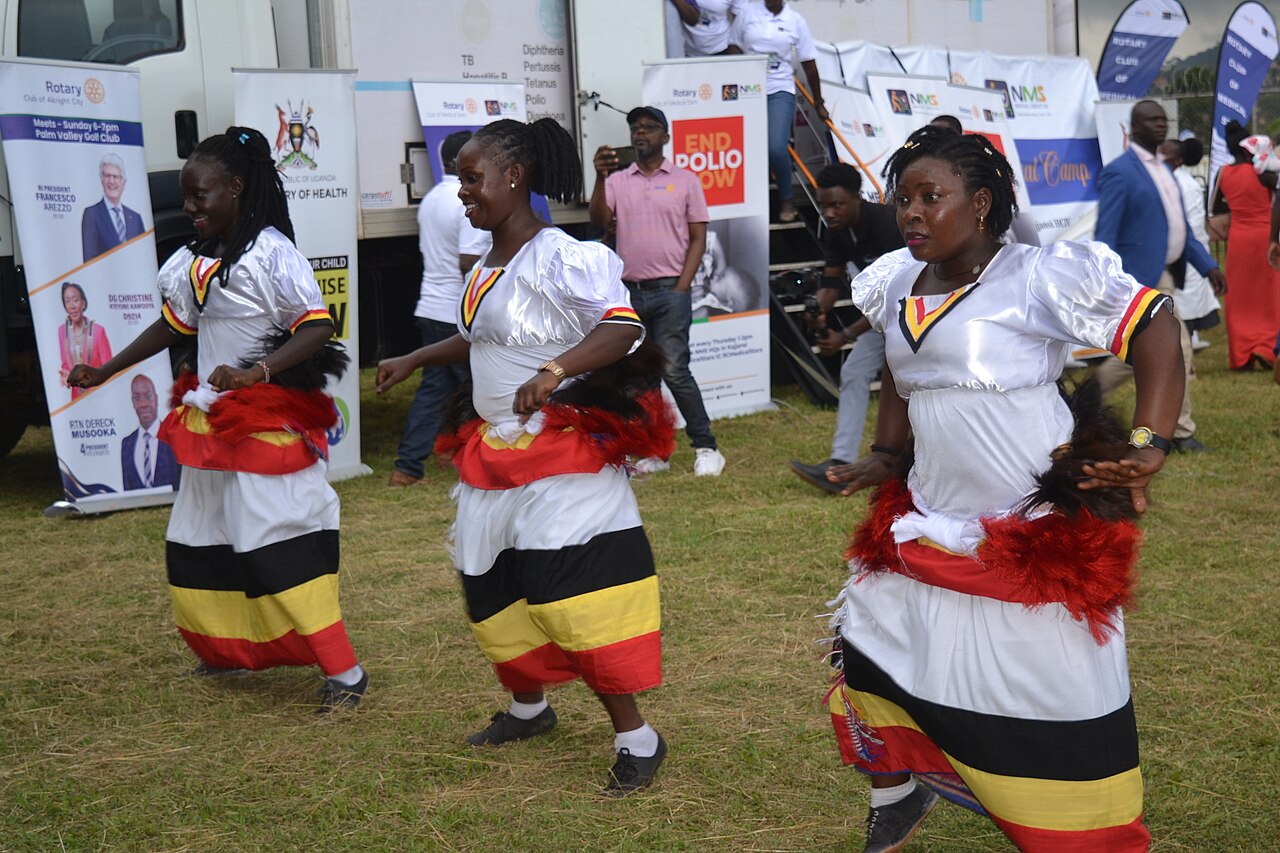
Ugandans celebrating their culture with Gomesi, drums and woven crafts

Culture & Heritage

Uganda’s heritage lives through its many peoples, languages, kingdoms, chiefdoms, belief systems and regional histories. It includes both physical places and knowledge passed between generations.

Learn from this collection

Tangible heritage includes historic buildings, royal sites, monuments, sacred places, tools, artworks and museum objects. Intangible heritage includes oral history, music, dance, storytelling, food traditions, ceremonies, skills and community memory.

Clothing and craftsmanship tell powerful stories. The Gomesi or Busuuti, kanzu, barkcloth, basketry, pottery, beadwork, drums, adungu and other instruments express identity while continuing to evolve in modern Uganda.

Cultural tourism must be based on respect rather than display. Visitors should ask before photographing, listen to community interpretation, pay fairly for experiences and crafts, and avoid reducing Uganda’s diverse living cultures to a single stereotype.

52EDUCATIONAL
COLLECTIBLE CARDS

11 · CONSERVATION LEARNING GUIDE

When does a species become threatened?

This text-led chapter sits beside the ten card collections as a learning guide—not as an eleventh 52-card deck. It explains how extinction risk is measured, introduces Ugandan species of concern and shows how informed visitors can become respectful conservation partners.

THE GLOBAL ASSESSOR

Who decides?

The International Union for Conservation of Nature (IUCN) maintains the IUCN Red List of Threatened Species, the world’s most widely used scientific system for assessing extinction risk. An assessment is prepared from evidence by qualified assessors, checked by reviewers and submitted through the relevant IUCN Red List Authority. For birds, BirdLife International is the official Red List Authority.

The assessment asks measurable questions: How many mature individuals remain? Is the population declining? How large and fragmented is its range? Are habitats disappearing? Can a quantitative analysis estimate extinction risk? A species is placed in the highest category for which it meets at least one criterion. Statuses are reassessed when stronger data or real changes become known.

UGANDA'S CONSERVATION BODY

Who protects wildlife here?

Uganda Wildlife Authority (UWA) is the government agency mandated to conserve and sustainably manage Uganda’s wildlife and protected areas. Its work includes ecosystem management, research and monitoring, wildlife protection, community conservation, managing human–wildlife conflict, tourism and licensing wildlife use.

An IUCN category is a global scientific risk assessment—not an arrest warrant, ownership certificate or complete statement of Ugandan law. National assessments may find a species more or less threatened inside Uganda than it is globally, while Ugandan law and international agreements such as CITES can give legal protection or regulate trade. Science describes the risk; governments and communities decide and carry out protection.

READ THE RED LIST

Nine categories, one rising scale of risk

Threatened has a precise meaning on the Red List: it groups Vulnerable, Endangered and Critically Endangered species. “Rare” does not automatically mean threatened, and a familiar species can still be declining rapidly.

  1. NENot EvaluatedNot yet assessed against the criteria.
  2. DDData DeficientToo little evidence to judge—not proof that the species is safe.
  3. LCLeast ConcernAssessed and not currently close to a threatened threshold.
  4. NTNear ThreatenedClose to qualifying, or likely to qualify soon.
  5. VUVulnerableFacing a high risk of extinction in the wild.
  6. ENEndangeredFacing a very high risk of extinction in the wild.
  7. CRCritically EndangeredFacing an extremely high risk of extinction in the wild.
  8. EWExtinct in the WildSurvives only in cultivation, captivity or outside its former range.
  9. EXExtinctNo reasonable doubt that the last individual has died.

UGANDAN SPECIES TO KNOW

Risk has feathers, fur—and a habitat story.

These global categories are learning examples recorded for species found in Uganda. They are a snapshot, not a permanent label: always check the latest assessment and its date before publishing, teaching or planning conservation work.

CRCRITICALLY ENDANGERED

Vultures and forest elephants

The Hooded Vulture and White-backed Vulture are among Uganda’s Critically Endangered birds. Vultures reproduce slowly, so losses from poisoned carcasses, deliberate killing, belief-based trade, unsafe veterinary drugs and power infrastructure can overwhelm their ability to recover. Yet they provide an extraordinary public service by rapidly removing carrion and helping limit disease pathways.

The African forest elephant is also Critically Endangered globally. Poaching for ivory, forest loss and fragmentation have driven a severe long-term decline. Protecting an elephant therefore means more than guarding one animal: it means protecting connected forests, migration routes and the ecological work elephants perform by opening pathways and dispersing seeds.

ENENDANGERED

Cranes, gorillas and chimpanzees

Uganda’s national bird, the Grey Crowned Crane, is Endangered. It needs shallow wetlands and nearby grasslands, but drainage, cultivation, disturbance, collision with power lines and illegal capture of birds or eggs reduce safe breeding space. Wetland protection helps cranes while also storing water, filtering pollution and supporting people’s livelihoods.

The mountain gorilla and eastern chimpanzee are Endangered. Their pressures include habitat loss and isolation, snares set for other animals, disease transmission and human–wildlife conflict. Ranger protection, veterinary surveillance, connected habitat and tourism that follows strict health and distance rules can help populations while supporting neighbouring communities.

VUVULNERABLE

Shoebills and lions

The Shoebill is Vulnerable and depends on large, healthy freshwater wetlands. Burning or draining marshes, disturbance at nests, capture for illegal trade and changes to water systems can remove feeding and breeding habitat. Patient, low-noise birding from a respectful distance is far better than pushing a guide or boat operator too close for a photograph.

The lion is Vulnerable globally. Habitat loss, fewer wild prey, illegal killing and conflict after livestock losses place pressure on populations. Effective conservation combines protected habitat and prey recovery with well-managed tourism, safe livestock practices, rapid conflict response and fair benefits for people who live beside lion range.

WHY SPECIES DECLINE

Threats often work together.

Habitat loss can leave a small population isolated; a drought, disease outbreak, fire or a few poaching incidents can then have a much larger effect. Wetland drainage, forest clearance, agricultural expansion, pollution, overfishing, invasive species and climate change alter the places wildlife needs for food, shelter and breeding.

Direct pressures include snares, illegal wildlife trade, poisoning, retaliatory killing and collisions or electrocution on poorly designed infrastructure. Conservation must diagnose the cause. Counting animals without protecting habitat, reducing mortality and working with local people treats the symptom rather than the system.

WHAT CONSERVATION DOES

Protection is a shared practice.

Strong responses connect protected areas with wildlife corridors, restore forests and wetlands, remove snares, investigate wildlife crime and make roads and power lines safer. Scientists repeat surveys and track population trends; educators build understanding; communities lead stewardship and develop livelihoods that make living wildlife valuable.

Responsible tourism can finance rangers, local enterprises and habitat protection, but only when visits follow park rules and avoid stress, crowding or habitat damage. Conservation succeeds when evidence, law, local knowledge and fair community benefit reinforce one another over many years.

YOUR FIELD ETHIC

Six actions for an informed visitor

  • Use licensed guides and follow UWA instructions, viewing distances and group limits.
  • Never feed, touch, call, chase or crowd wildlife for a closer photograph.
  • Never buy live wildlife, feathers, eggs, ivory, skins or other products of uncertain origin.
  • Keep wetlands and trails clean; reduce single-use waste and carry litter out.
  • Choose operators that employ local people, explain conservation and behave responsibly.
  • Report suspected trafficking or injured wildlife to the relevant authorities—do not confront offenders yourself.

Learning sources: IUCN Red List Categories, Criteria and assessment process · BirdLife International Red List science · Uganda Wildlife Authority mandate and conservation work.

IUCN assessment process ↗BirdLife Red List guide ↗About UWA ↗
Information checked August 2026. Species assessments can change as evidence improves or populations change.

WHY COLLECT UGANDA WILD CARDS?

Every card opens the door
to Uganda’s wild wonders.

Uganda Wild Cards celebrates Uganda’s extraordinary wildlife, birds, reptiles, insects, national parks and natural heritage. Whether you are a child, parent, student, tourist, researcher or collector, every card is an invitation to discover the Pearl of Africa.

Tourist holding Uganda Wild Cards during a wildlife safari in Uganda
01 · DISCOVER THE BENEFITS

Hold Uganda’s Wildlife in Your Hands

A tourist holds Uganda Wild Cards during a wildlife safari—an educational and meaningful souvenir that helps travellers take home Uganda’s wildlife and natural beauty.

01

Hold Uganda’s Wildlife in Your Hands

Give every traveller a pocket-sized connection to the remarkable animals and landscapes they encountered in Uganda.

02

Collect Meaningful Safari Souvenirs

Build a lasting collection that carries more meaning, knowledge and memory than an ordinary souvenir.

03

Take Home Uganda

More than a souvenir—Uganda Wild Cards are a lasting memory of the Pearl of Africa.

Ugandan family learning about wildlife with Uganda Wild Cards
02 · DISCOVER THE BENEFITS

Create Family Adventures

A Ugandan family learns and plays together with Uganda Wild Cards, creating screen-free family adventures while discovering Uganda’s animals and natural heritage.

Families can use the cards at home, on nature walks or during safaris to play quizzes, identify species and create wildlife treasure hunts together.

01

Create Family Adventures

Turn ordinary family time into an exciting journey of discovery. Parents and children can play quizzes, match animals, compare interesting facts and challenge one another to identify different species.

During safaris and nature walks, families can carry their cards and turn wildlife viewing into a treasure hunt. Every animal spotted becomes a shared memory and an opportunity to learn together without screens.

02

Learn While You Collect

Every Uganda Wild Card introduces fascinating information about a particular animal, bird, natural wonder or cultural treasure. Collectors can learn scientific names, habitats, behaviour, diet, lifespan and conservation status.

As the collection grows, so does the learner’s knowledge of Uganda. Children and adults can exchange cards, complete themed decks and discover how different species contribute to Uganda’s rich biodiversity.

Teacher using Uganda Wild Cards to teach students about wildlife and conservation
03 · DISCOVER THE BENEFITS

Bring Wildlife into the Classroom

Ugandan students use Uganda Wild Cards to learn about wildlife, national parks, biodiversity and environmental conservation in the classroom.

Teachers can turn the cards into quizzes, matching games, group discussions, storytelling activities and research assignments that make every lesson more active and memorable.

01

Inspire Schools & Universities

The cards are valuable resources for primary schools, secondary schools, wildlife clubs, tourism institutions and university environmental programmes. They encourage curiosity, teamwork and independent research.

Teachers and lecturers can use the collections to introduce biodiversity, conservation, tourism and natural heritage. Students can also create presentations and plan educational visits based on what they discover.

02

Promote Domestic Tourism

Uganda Wild Cards encourage Ugandans to explore the remarkable wildlife and destinations found within their own country. Every card can introduce a new national park, species or natural attraction worth visiting.

Families, schools and student groups can use the cards to plan educational tours and wildlife adventures. This helps learners connect what they study with real places while supporting local tourism and conservation.

Traveller holding an African elephant Uganda Wild Card while viewing elephants on safari
04 · DISCOVER THE BENEFITS

Complete Your Safari Challenge

A traveller matches an African elephant Uganda Wild Card with a real elephant herd during a wildlife safari in Uganda, preserving an unforgettable travel memory.

Carry your deck on game drives, boat cruises and nature walks, then challenge yourself to identify the animals and birds you encounter along the way.

01

Preserve Your Travel Memories

Every card can bring back the excitement of a special wildlife sighting, an unforgettable landscape or a memorable moment shared with a guide, friend or family member.

Write down where and when you spotted each species, then keep the cards as a personal safari record. Long after the journey ends, your collection will continue telling the story of your time in Uganda.

02

Keep the Safari Alive

Your discovery does not have to end when you leave the national park. Read the facts, compare species and scan the QR codes to explore more stories, videos, animal calls and conservation information.

Share what you learned with family and friends when you return home. Each card helps you relive the adventure while introducing others to Uganda’s wildlife, landscapes and natural heritage.

03

Complete Your Safari Challenge

Choose the species in your deck that you hope to see, then mark each successful sighting as you travel through Uganda’s national parks, forests and wetlands.

Challenge your family, school group or travel companions to identify the most animals and birds. The search makes every game drive, boat cruise and nature walk more exciting and rewarding.

Complete Uganda Wild Cards collection with wildlife, national parks and cultural heritage decks
05 · DISCOVER THE BENEFITS

Build Every Deck

Explore the complete Uganda Wild Cards collection featuring themed decks about mammals, birds, reptiles, insects, national parks, culture and heritage.

Start with your favourite theme, trade duplicate cards and gradually complete every deck to build a proudly Ugandan library for learning, play and lifelong discovery.

01

Celebrate Uganda’s Wildlife

Build a colourful collection that celebrates Uganda’s remarkable mammals, birds, reptiles, insects, plants, national parks and natural wonders.

Every completed set becomes a visual journey across the Pearl of Africa and a reminder of why its species and habitats deserve appreciation and protection.

02

Build Every Deck

Begin with one themed collection and gradually explore them all—from wild animals and birds to reptiles, insects, trees, aquatic life, national parks, culture and heritage.

Trade duplicate cards, compare collections with friends and enjoy the satisfaction of completing each 52-card deck. Together, the decks create a rich library of Uganda’s natural and cultural story.

03

Build a Valuable Collection

Look out for first-print cards, limited editions, holographic designs and special releases created to make each collection distinctive and exciting.

Keep your cards clean, organised and safely stored so they can be enjoyed for years. A carefully preserved collection can become a treasured family keepsake and an important record of Uganda Wild Cards’ journey.

Rare holographic, gold-edition and first-print Uganda Wild Cards
06 · DISCOVER THE BENEFITS

Discover Rare Collectibles

Rare Uganda Wild Cards feature holographic, gold-edition, first-print and limited-edition wildlife cards created for collectors and trading.

01

Discover Rare Collectibles

Look out for limited editions, holographic cards, first-print editions and ultra-rare species that make every pack exciting.

02

Trade With Other Collectors

Swap duplicate cards, complete your decks and join a growing community of wildlife enthusiasts.

Ugandan rangers and schoolchildren planting trees to protect wildlife habitat
07 · DISCOVER THE BENEFITS

Become a Conservation Ambassador

Ugandan wildlife rangers and schoolchildren plant indigenous trees while learning about endangered species and protecting wildlife habitats.

01

Support Wildlife Conservation

Every card raises awareness about protecting Uganda’s wildlife and preserving habitats for future generations.

02

Protect Endangered Species

Learn about threatened animals and discover how small actions can make a big difference in conservation.

03

Become a Conservation Ambassador

Help spread appreciation for Uganda’s biodiversity and the importance of protecting it.

Traveller sharing Uganda Wild Cards with friends and children outside Uganda
08 · DISCOVER THE BENEFITS

Share Uganda With the World

A traveller shares Uganda Wild Cards and safari stories with friends and children abroad, introducing them to Uganda’s wildlife and inspiring the next journey.

01

Share the Experience Back Home

Use the cards to tell safari stories and introduce friends and family to the wildlife seen during your journey.

02

Inspire the Next Journey

Encourage other travellers to discover Uganda’s national parks, wildlife, communities and natural beauty for themselves.

03

Share Uganda With the World

Introduce friends and family across the globe to Uganda’s wildlife and inspire future travel.

Phone scanning a Uganda Wild Cards QR code to access mountain gorilla videos and information
09 · DISCOVER THE BENEFITS

Unlock Interactive Experiences

Scan Uganda Wild Cards to unlock wildlife videos, animal sounds, habitat information and conservation stories—keeping your Uganda safari experience alive.

01

Unlock Interactive Experiences

Scan QR codes to watch videos, hear animal calls, explore habitats and learn more about every species.

Uganda Wild Cards gift package with wildlife cards, T-shirt, safari cap and souvenir mug
10 · DISCOVER THE BENEFITS

The Perfect Gift

A premium Uganda Wild Cards gift package with collectible wildlife cards and branded safari merchandise—the perfect educational gift and meaningful souvenir from Uganda.

01

The Perfect Gift

An unforgettable gift for tourists, schools, families, wildlife lovers, collectors and everyone who loves Uganda.

OUR MISSION

To transform every collector into a conservationist, every child into an explorer, every family into a traveller, every classroom into a wildlife learning centre, and every tourist into an ambassador for Uganda’s natural heritage.
A Proudly Ugandan Initiative

Uganda Wild Cards is a proudly Ugandan initiative by Muzunguka Safaris, dedicated to promoting conservation, environmental education, domestic tourism and unforgettable safari experiences through premium collectible cards.

Collect. Learn. Explore. Protect.

THE COLLECTION

Meet Uganda’s wild side

From Bwindi’s mountain gorillas to Murchison’s giraffes and Mabamba’s shoebills, the first edition gathers 52 unforgettable species.

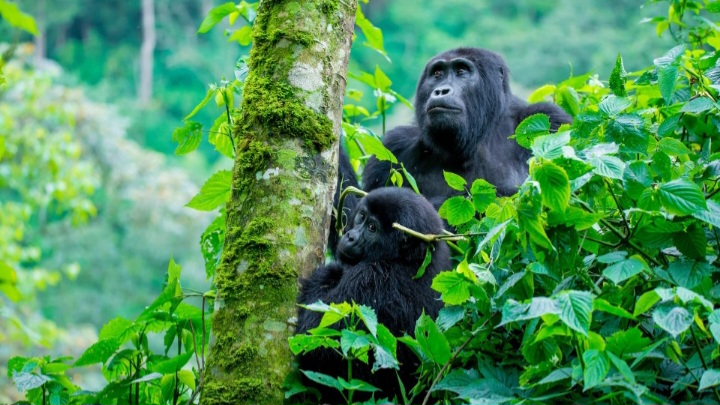
Mountain Gorilla · Gentle giants of Uganda’s misty forests

TURN IT OVER

Every card tells
a deeper story.

The front captures the beauty. The back rewards curiosity with carefully organised information that makes learning feel effortless.

See what’s inside
Mountain Gorilla educational card back
01Uganda map

See where every species lives across the country.

02Quick facts

Diet, lifespan, size and behaviour at a glance.

03Conservation

Understand each animal’s status and the threats it faces.

04QR discovery

Scan to unlock deeper stories, videos and learning.

FROM CARD TO CONSERVATION JOURNEY

Scan. Discover.
Experience Uganda.

Every Uganda Wild Card connects the collector to a deeper digital experience. Scan the QR code to explore the species—and plan a journey to encounter it in the wild.

01 Scan the card02 Unlock its world03 Begin your safari
UGANDA WILD CARDS
Shoebill standing alone in a Ugandan papyrus wetland
BIRDS OF UGANDAShoebillBalaeniceps rex
QR code linking to the Shoebill discovery page
UGANDA WILD CARDS

SHOEBILL · MABAMBA WETLAND

QR EXPERIENCE

Meet the Shoebill

Step into Mabamba’s papyrus channels and meet a patient wetland hunter with an unmistakable shoe-shaped bill.

FEATURED QR EXPERIENCE

Shoebill · Mabamba Wetland

Meet the Shoebill, understand its freshwater-wetland home and learn how to visit Mabamba responsibly with an experienced local bird guide.

  • Verified species story
  • Uganda location guide
  • Responsible viewing tips
  • Conservation information
Open the Shoebill Experience →
The card QR opens a permanent Uganda Wild Cards species page. Video and animal-call features can be added later when licensed media is ready.

SAFARIS & TOURS BY MUZUNGUKA SAFARIS

Experience Uganda
Behind the Cards.

Discover Uganda through professionally planned, locally operated safaris by Muzunguka Safaris. We create private and group journeys for international visitors, Ugandan families, schools, universities, photographers and wildlife lovers.

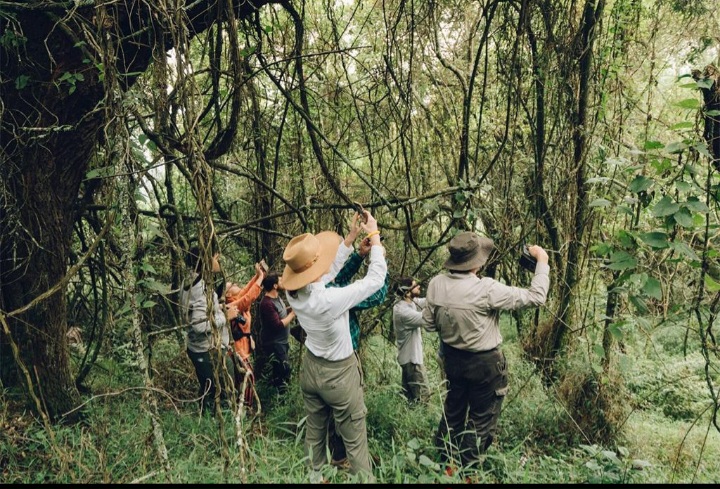
Mountain gorillas in Bwindi Impenetrable National Park Uganda

Gorilla Trekking

Trek through Bwindi Impenetrable or Mgahinga Gorilla National Park for an unforgettable, responsibly guided encounter with Uganda’s mountain gorillas.

Guided chimpanzee tracking experience in Kibale Forest Uganda

Chimpanzee Tracking

Follow experienced guides into Kibale Forest and listen for chimpanzees calling and moving through the tropical canopy.

Elephant, lion and giraffe on a wildlife safari in Uganda

Wildlife Safaris

Experience game drives and boat cruises across Uganda’s national parks while searching for elephants, lions, giraffes, hippos and other remarkable wildlife.

Shoebill and Grey Crowned Crane on a birding tour in Uganda

Birding Tours

Explore Uganda’s forests, wetlands and savannahs with knowledgeable local bird guides in search of the shoebill and hundreds of other species.

Ugandan cultural experience with traditional dress, music and dance

Cultural Tours

Meet local communities, discover Uganda’s traditions and enjoy respectful cultural experiences that go beyond ordinary wildlife tourism.

Guided hiking tour in Uganda's Rwenzori Mountains

Hiking & Mountains

Explore the Rwenzori Mountains, Mount Elgon, volcanic landscapes and scenic highland trails with experienced local guides.

Wildlife photographer photographing elephants on safari in Uganda

Photography Safaris

Join slow-paced, light-conscious journeys planned for wildlife photographers, filmmakers and content creators.

Ugandan students learning about wildlife and conservation on an educational tour

Student Educational Tours

Give students practical opportunities to learn about wildlife, geography, conservation, tourism and Uganda’s cultural heritage.

Ugandan family planning a wildlife safari holiday together

Family Safari Holidays

Enjoy safe and flexible Uganda adventures designed for parents, children and multigenerational families.

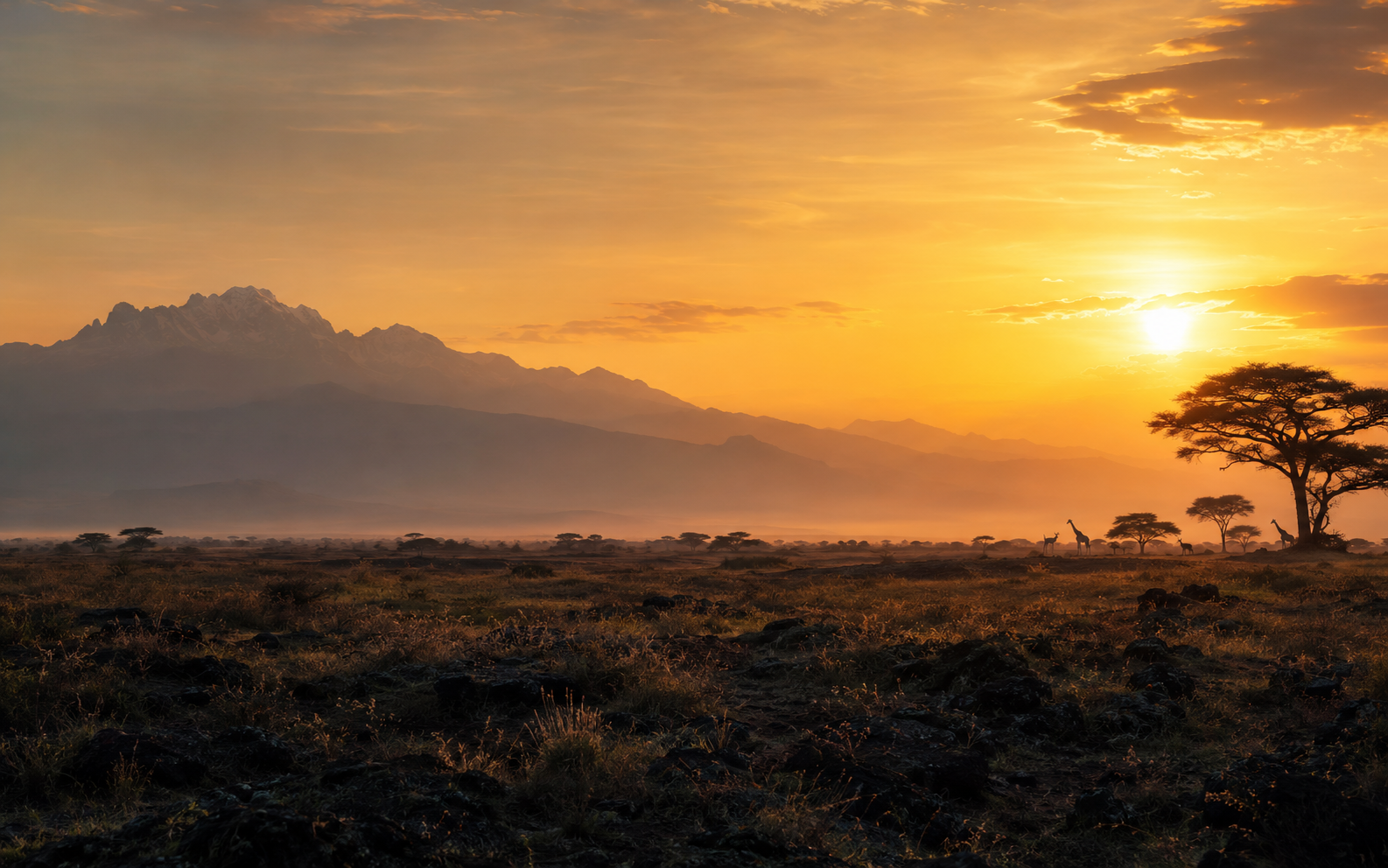
Golden Uganda safari landscape for a custom Muzunguka Safaris itinerary

Custom Uganda Itineraries

Share your interests, travel dates and budget, and Muzunguka Safaris will create a personalized Uganda safari itinerary.

FLY-IN SAFARIS & SAFARI FLIGHTS

Fly closer to the wild.
Spend more time on safari.

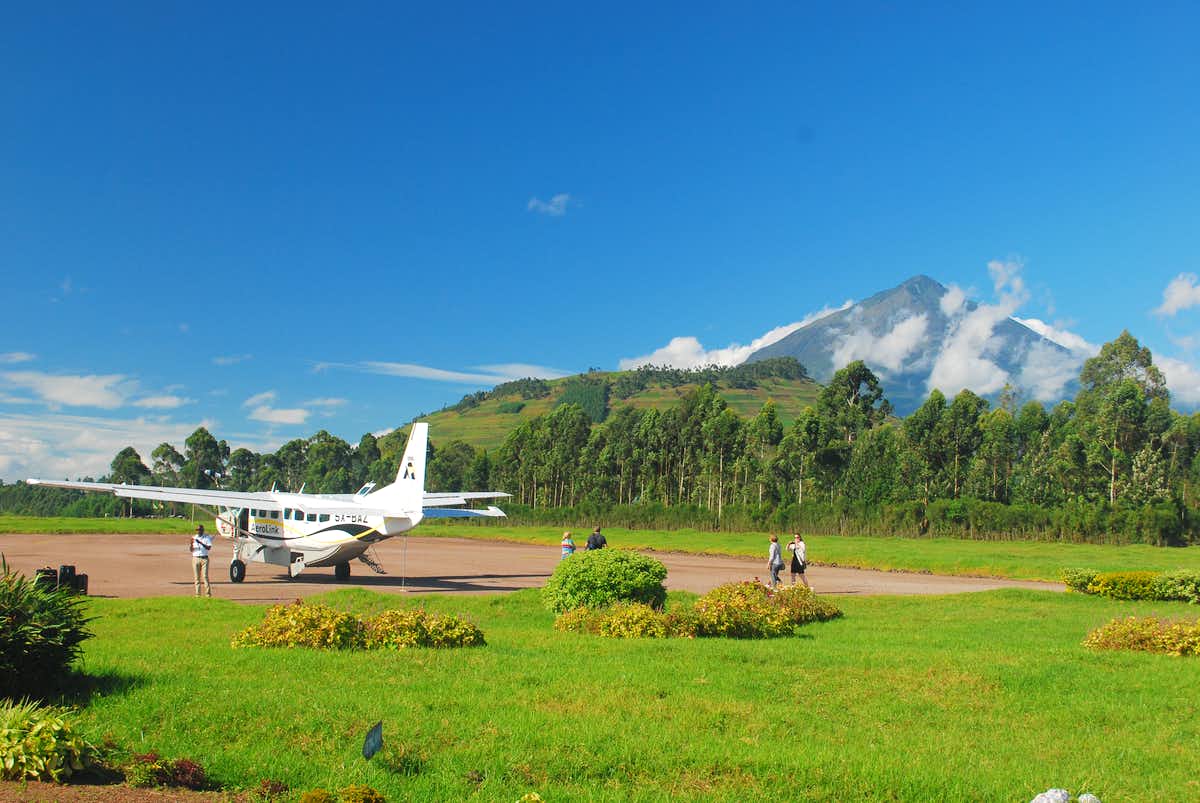
Explore Uganda and East Africa by light aircraft, with scheduled safari flights or a private charter arranged around your itinerary. Muzunguka Safaris connects the flight with your lodge, professional guide, safari vehicle and airstrip transfers—making remote parks easier to reach without losing valuable holiday time on long road journeys.

01WHO?

Travellers who value time and flexibility

Fly-in safaris suit couples, families, photographers, private groups and travellers with limited holiday time. Shared scheduled safari flights can offer good value, while a private aircraft charter gives one party greater control over timing and routing.

02WHAT?

A safari journey using a light aircraft

A licensed aviation operator provides the confirmed aircraft and crew. Depending on the route, this may be a small fixed-wing safari plane, often called a bush plane, a shared scheduled service or a private charter. Muzunguka Safaris coordinates the complete tourism itinerary but does not operate the aircraft.

03WHERE?

From major airports to safari airstrips

Routes may connect Entebbe or Kajjansi with approved airstrips serving Bwindi, Queen Elizabeth, Murchison Falls and Kidepo, or link regional destinations such as the Maasai Mara, Serengeti, Amboseli, Zanzibar and the Kenyan coast—subject to current operations and permissions.

04WHEN?

When road time would consume the holiday

Choose a fly-in safari for a short Uganda holiday, gorilla trekking trip, multi-park itinerary, photography journey or remote lodge stay. Departure times depend on daylight operations, weather, passenger check-in, aircraft availability and airstrip conditions.

05WHY?

More wildlife time, less time in transit

Flying can replace lengthy road transfers, offer memorable aerial views and make ambitious park combinations more comfortable. It is especially useful when reaching remote national parks or linking Uganda with other East African safari destinations.

06HOW?

One itinerary coordinated end to end

Share your dates, destinations, passenger number, approximate passenger weights, luggage and camera equipment. We compare suitable scheduled or charter options, then align the confirmed flight with accommodation, guides, safari vehicles and transfers.

WHAT WE COORDINATE

From runway to game drive.

  • Scheduled or private flight optionsCurrent quotations based on route, passenger load, airstrip and aircraft availability.
  • Multi-park connectionsPractical park-to-park or cross-border routing with realistic transfer times.
  • Airstrip transfersSafari vehicles, lodge check-ins and guides aligned with your arrival and departure.
  • Passenger and luggage briefingAdvance guidance on identification, check-in, soft-sided bags and strict weight limits.
  • Licensed aviation operatorsFlights are supplied and controlled by appropriately authorised operators and crews.
  • Weather contingency planningClear communication when weather, airstrip conditions or operational safety changes a flight.
SAFETY & REGULATORY NOTE

Every safari flight remains subject to the aviation operator’s final acceptance, aircraft availability, passenger and baggage limits, weather, airstrip suitability and the requirements of the relevant civil aviation authorities. A quotation is not a confirmed flight until the licensed operator accepts the booking.

Uganda Civil Aviation Authority ↗Kenya Civil Aviation Authority ↗Tanzania Civil Aviation Authority ↗

EAST AFRICA EXPEDITIONS

Uganda at heart.
East Africa within reach.

Travel beyond Uganda with professionally planned safaris and excursions across Kenya, Tanzania and Rwanda—operated by Muzunguka Safaris and connected through one personalised itinerary.

Explore East Africa Expeditions →

UGANDA HERITAGE, CULTURE & HISTORY TRAILS

Meet Uganda first.
Then follow its history.

Begin with Uganda’s living cultures—its peoples, kingdoms, clans, languages, food, fashion, architecture, music and customs—before following the documented routes of explorers, missionaries and company agents. Muzunguka Safaris connects community-led cultural learning with forts, royal sites, mission stations, the Nile and archival history.

History told from both sides.

These are not colonial-nostalgia tours. Each journey examines European records alongside the histories of Buganda, Bunyoro, Busoga, Acholi and other Ugandan communities—including the African leaders, guides, interpreters, soldiers, porters and families whose contributions were often left out of published expedition accounts.

UGANDA CULTURE & LIVING HERITAGE

Many peoples.
One remarkable country.

Uganda’s culture cannot be explained through one costume, one dance or one language. The country is home to many ethnic communities belonging broadly to Bantu, Nilotic, Central Sudanic and other historical language-and-migration traditions. Kingdoms, chiefdoms, clans, age systems, faiths, urban life and cross-border relationships all contribute to modern Ugandan identity.

“Tribes of Uganda” is a widely searched phrase, but this guide mainly uses ethnic communities or peoples. A culture is not a museum display: it changes as people move, marry, study, worship, create businesses and adopt new technologies while maintaining selected traditions.

Ugandan cultural heritage with traditional dress, drums and crafts
LIVING HERITAGECulture is carried by people

Language, memory, food, music, craftsmanship, belief and family relationships keep heritage alive.

01

Peoples, languages and regions

Uganda’s communities cross modern district and national borders. Language may connect people, but it does not erase clan, kingdom, religious, urban or personal identities.

02

Clans, totems and kinship

In many societies, clans organise ancestry, marriage obligations, mutual support and ritual identity. Totems must be understood through custodians—not reduced to mascots.

03

Food and hospitality

Bananas, millet, sorghum, cassava, sweet potatoes, beans, groundnuts, sesame, vegetables, fish, milk and meat are transformed into distinct regional cuisines.

04

Fashion and craftsmanship

Gomesi, kanzu, wraps, barkcloth, skins, beadwork and fibre traditions coexist with contemporary fashion. Pottery, basketry, ironwork and carving preserve practical knowledge.

05

Homes and architecture

Thatch, earth, reeds, timber, stone and courtyards respond to climate, livelihood and social organisation—from royal compounds to pastoral manyattas and highland farms.

06

Music, instruments and dance

Drums, xylophones, lyres, harps, tube fiddles, thumb pianos, horns, flutes, rattles and voice carry praise, history, courtship, worship, work and political commentary.

07

Customs and ceremonies

Birth, naming, initiation, marriage, coronation, healing and burial practices differ greatly. Visitors must respect consent, sacred restrictions and changing interpretations.

08

Traditional defence and weaponry

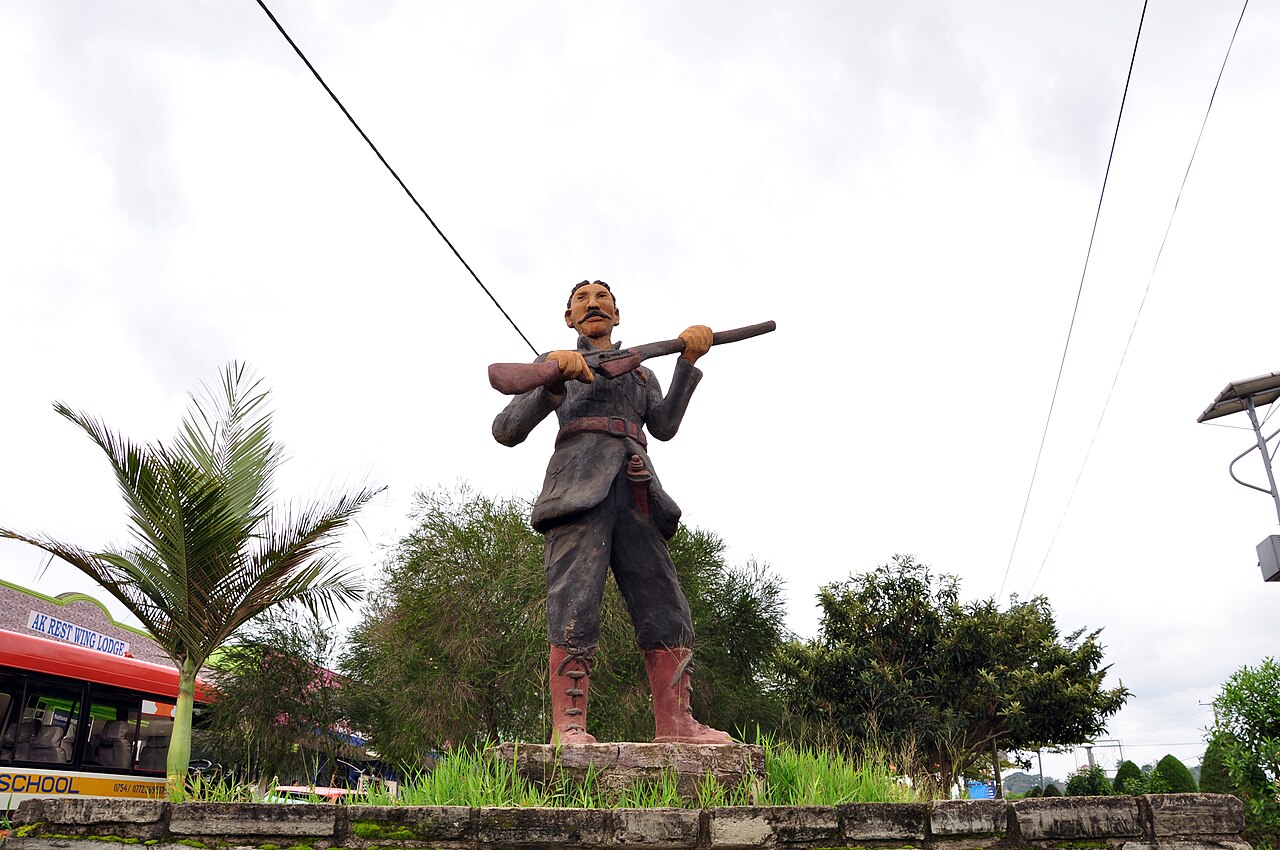
Spears, shields, bows, clubs and later firearms belong to histories of hunting, herding, state-building and conflict. They are interpreted as heritage within present-day law.

SELECTED ETHNIC COMMUNITIES OF UGANDA

Open a community profile and explore its living culture.

This first collection presents widely known communities from different regions. It is not a ranking and it is not a complete list of Uganda’s peoples. More communities can be added as research, cultural consultation and appropriate imagery become available.

01Central Uganda · BugandaBagandaLuganda · Kabaka of Buganda
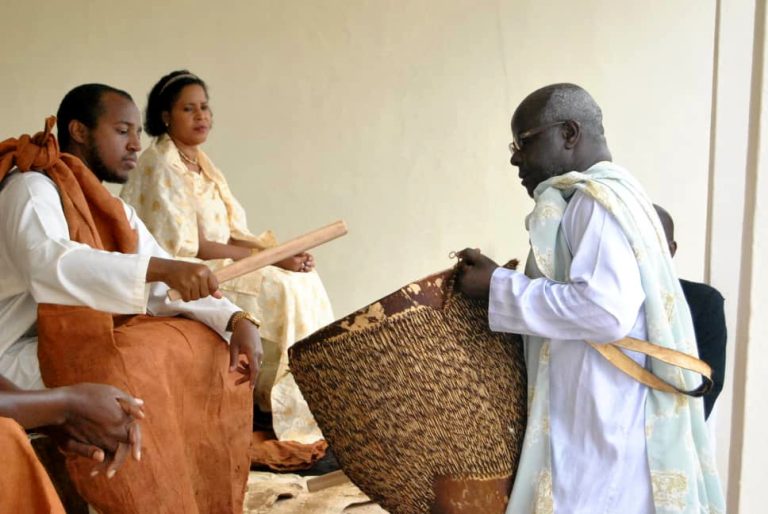
Kabaka of Buganda playing a ceremonial drum during a coronation anniversary in Mengo
HERITAGE FOCUSClans, totems and royal heritageImage source ↗

The Baganda are Uganda’s largest single ethnic community and the people of the historic Kingdom of Buganda. Their culture developed around a highly organised monarchy, counties, clan responsibilities, banana agriculture, Lake Victoria trade and a royal capital that moved with successive kings before becoming centred around present-day Kampala and Mengo.

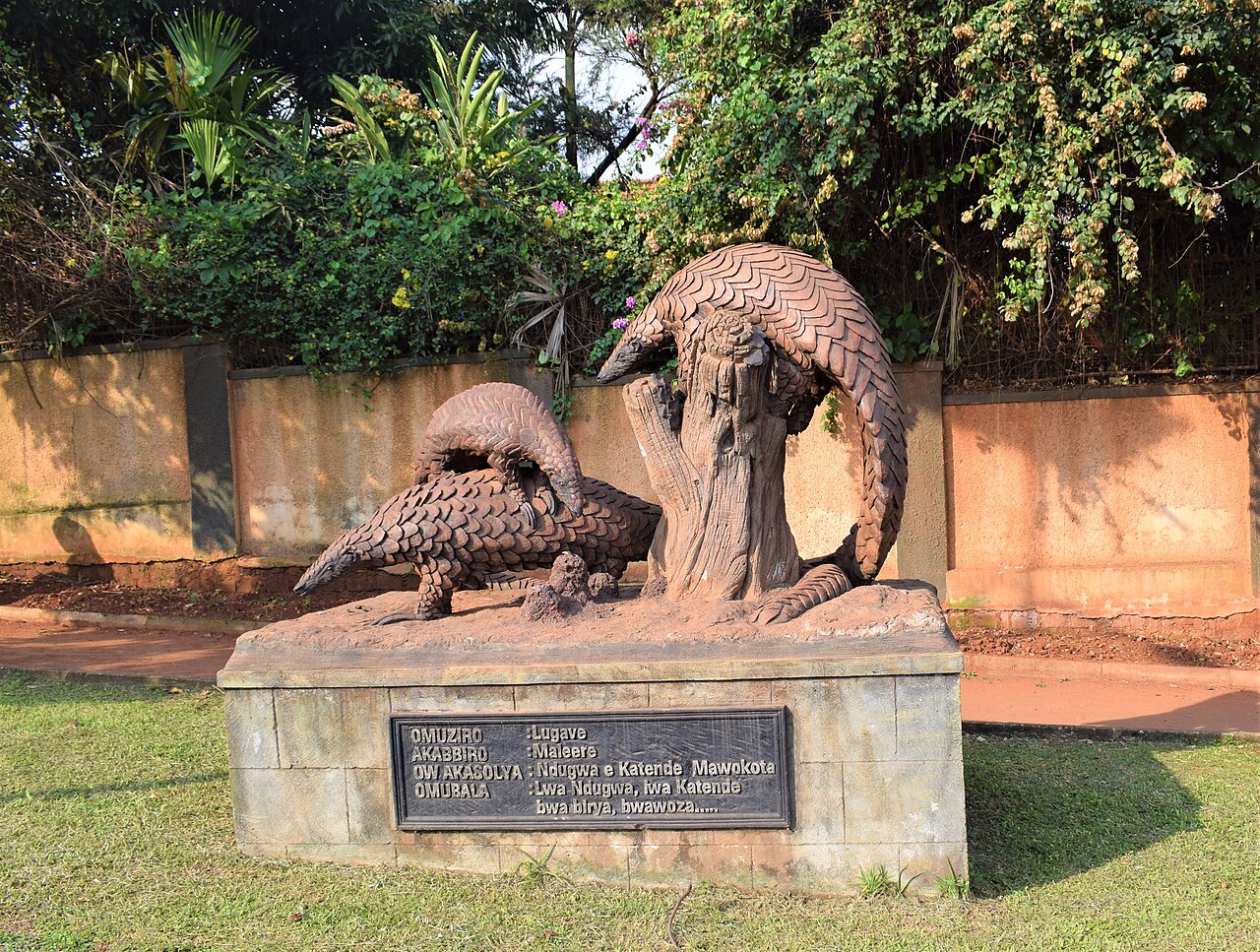
Lugave clan pangolin totem sculpture on the Buganda Royal Mile in Mengo
Lugave clan totem · MengoSource ↗
Clans & totems

Buganda is organised through clans, each associated with a totem and secondary totem. Totems guide identity, kinship and marriage relationships; they are not merely animal symbols or decorative logos.

20 Buganda clans and their main totems

The Buganda Kingdom describes Buganda as having more than 50 clans; historical listings commonly refer to 52. The number may differ according to the date and how royal or related lineages are classified. These are 20 examples—not the complete list.

  1. 01LugavePangolin
  2. 02FfumbeAfrican civet
  3. 03NgeyeColobus monkey
  4. 04NjovuElephant
  5. 05Mmamba GabungaLungfish
  6. 06MbogoBuffalo
  7. 07NgoLeopard
  8. 08NkimaVervet monkey
  9. 09NdigaSheep
  10. 10MbuziGoat
  11. 11MbwaDog
  12. 12MpologomaLion
  13. 13NkejjeSmall fish
  14. 14NkusuParrot
  15. 15NvubuHippopotamus
  16. 16ButikoMushroom
  17. 17NseeneneLong-horned grasshopper
  18. 18NggongeOtter
  19. 19Ngabi NnyungaBushbuck
  20. 20Nnyonyi NnyangeCattle egret
Explore the Buganda Kingdom clan archive ↗
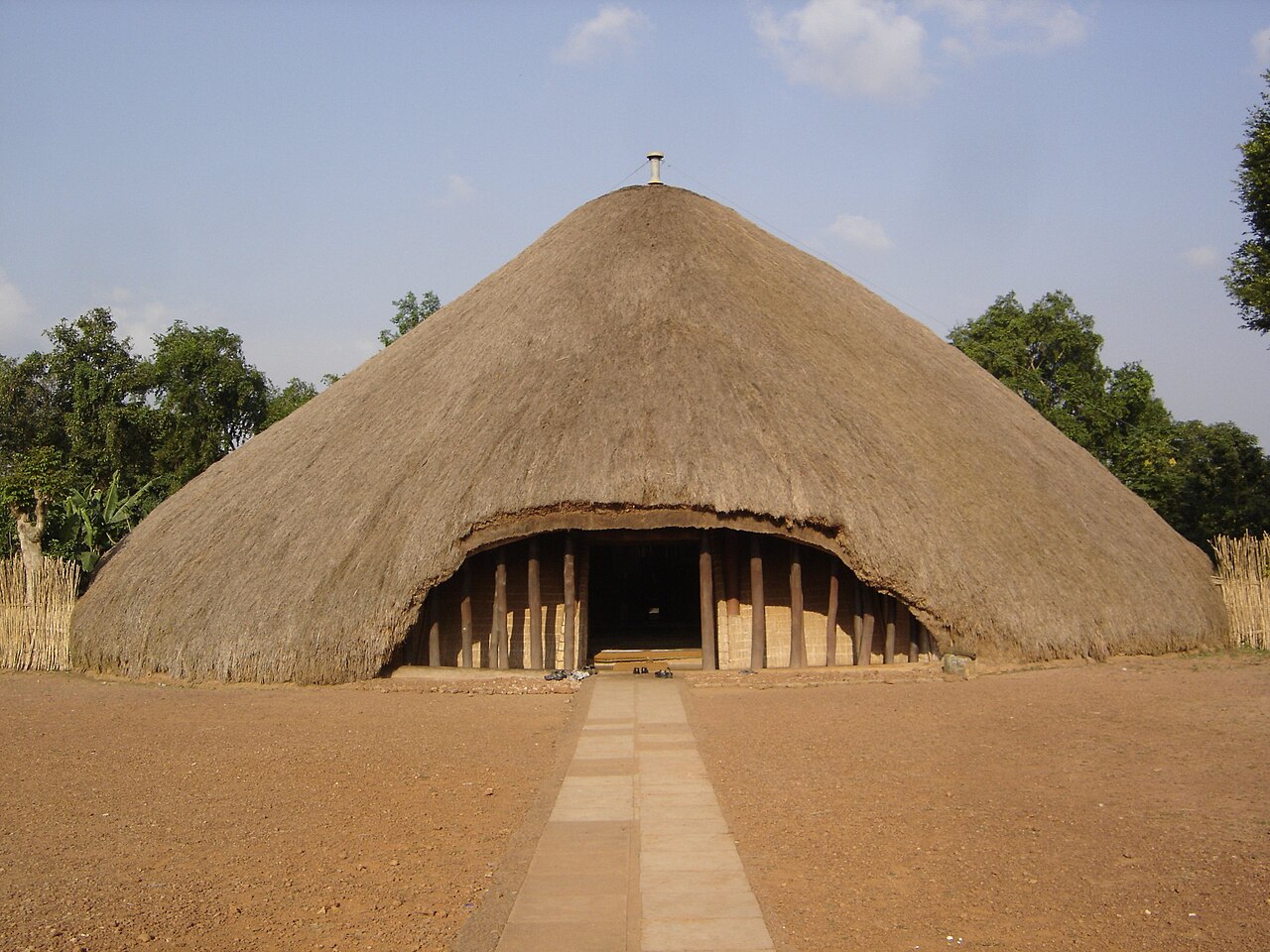
Monumental traditional thatched architecture at the Kasubi Tombs in Kampala
Kasubi Tombs · royal architectureSource ↗
Architecture & defence

Traditional homes used reeds, timber, earth and thatch, while royal compounds developed specialised gates, courtyards and houses. Spears, shields and organised royal forces belonged to earlier systems of security and warfare.

Family participants at a Buganda Kwanjula introduction ceremony
Kwanjula · family introduction ceremonySource ↗
Customs & heritage visits

Respect for elders, clan obligations, introductions between families and royal etiquette remain influential, although practice differs by family and generation. Key learning sites include Kasubi Tombs, Mengo, the Kabaka’s Palace and cultural craft communities.

KINGS, QUEENS & ROYAL LITERATURE

From Muteesa I to the present Buganda royal household

The portraits below trace six central figures in Buganda’s modern royal history. Their lives connect a powerful nineteenth-century African kingdom with missionary encounters, imperial expansion, colonial administration, Uganda’s independence, exile, the restoration of cultural institutions and the modern public work of the Kabaka and Nnabagereka.

30th Kabaka · Reigned 1856–1884Ssekabaka Muteesa I

Muteesa I ruled during an era when Buganda expanded its regional influence and encountered Muslim traders, European explorers and, later, Protestant and Catholic missionaries. He received visitors including John Hanning Speke and Henry Morton Stanley but dealt with them as the head of an established kingdom with its own government, armies, fleets, trade routes and diplomatic interests. His court became a meeting place for competing religious and political ideas. After his death in 1884, he became the first Kabaka buried at Kasubi, helping establish the site as the royal burial ground now recognised for its exceptional cultural importance.

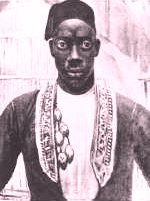
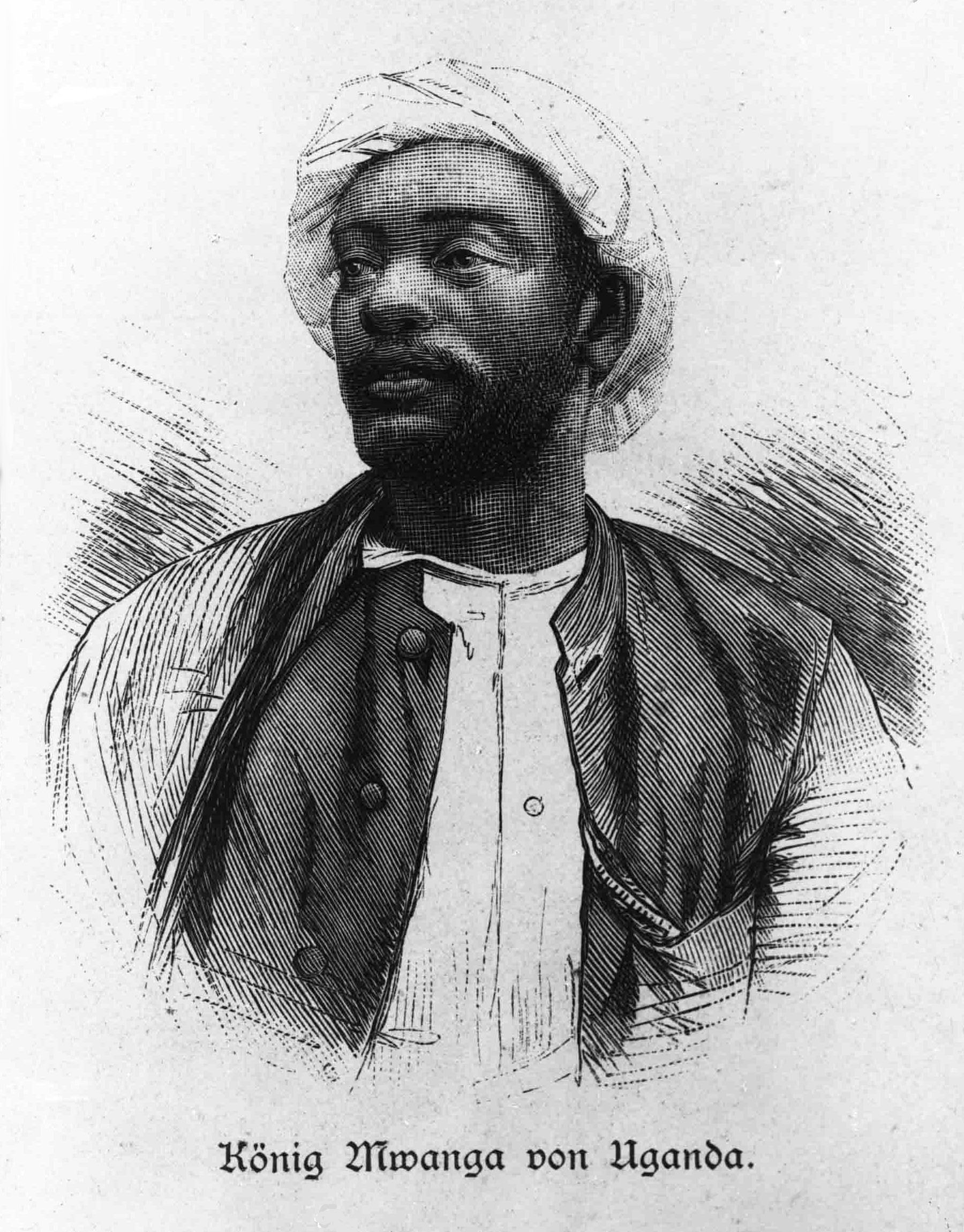
31st Kabaka · Reigned 1884–1888 and 1889–1897Ssekabaka Mwanga II

Mwanga II inherited the throne as a young ruler while Christian converts, Muslim leaders, missionaries and foreign commercial agents were competing for influence at court. His reign includes the executions of the Uganda Martyrs, the religious wars and bitter struggles over royal authority. He later resisted the expanding power of the Imperial British East Africa Company and British colonial rule, fighting alongside Omukama Kabalega of Bunyoro. Captured in 1899, Mwanga was exiled to the Seychelles, where he died in 1903. His legacy remains deeply contested and should be studied through religious, royal, nationalist and colonial perspectives rather than reduced to a single judgement.

34th Kabaka · Reigned 1897–1939Ssekabaka Daudi Chwa II

Daudi Chwa II was installed as Kabaka in 1897 while still an infant after the deposition of his father, Mwanga II. Regents governed during his childhood, and the 1900 Buganda Agreement reshaped landholding, chiefly authority and Buganda’s relationship with the British Protectorate. He later assumed full royal responsibilities and reigned through a period of rapid change in education, Christianity, administration and the colonial economy. His long reign helped preserve the cultural position of the Kabaka within a restricted colonial political system. He died in 1939 and was buried at Kasubi Tombs.

35th Kabaka · Reigned 1939–1969 · First President of UgandaSsekabaka Sir Edward Muteesa II

Sir Edward Muteesa II became Kabaka as a teenager and was crowned in 1942. His defence of Buganda’s constitutional position led the British colonial government to depose and exile him in 1953, but widespread mobilisation secured his return in 1955. After Uganda’s independence, he became the country’s first President in 1963 while remaining Kabaka. The alliance between his government and Prime Minister Milton Obote collapsed, culminating in the 1966 attack on the Lubiri and Muteesa’s flight into exile in Britain. He died in London in 1969; his remains were returned to Uganda in 1971 and buried at Kasubi.

36th Kabaka · Enthroned 31 July 1993Kabaka Ronald Muwenda Mutebi II

Ronald Muwenda Mutebi II, son of Sir Edward Muteesa II, was proclaimed heir while Buganda’s institutions were suppressed. Following the restoration of Uganda’s traditional kingdoms as cultural institutions, he was enthroned at Naggalabi Buddo on 31 July 1993 as the 36th Kabaka. His reign has focused on cultural renewal, the Luganda language, education, health, youth participation, clan identity and the stewardship of Buganda’s heritage sites. The Kabaka is a cultural leader within the Republic of Uganda rather than the head of a separate sovereign state, a distinction important for understanding the modern kingdom.

Queen of Buganda · Married the Kabaka on 27 August 1999Nnabagereka Sylvia Nagginda Luswata

Sylvia Nagginda became Nnabagereka after marrying Kabaka Mutebi II at St Paul’s Cathedral Namirembe in 1999. Educated in Uganda and the United States, she brought experience in communications, research and public service to the royal household. Through the Office of the Nnabagereka and related initiatives, she has promoted education, health, girls’ empowerment, children’s welfare and cultural values. Her public work demonstrates that the modern role of a queen extends far beyond ceremonial appearance. In 2023 she published an autobiography that offers her own account of family, identity, service and life within Buganda’s royal institution.

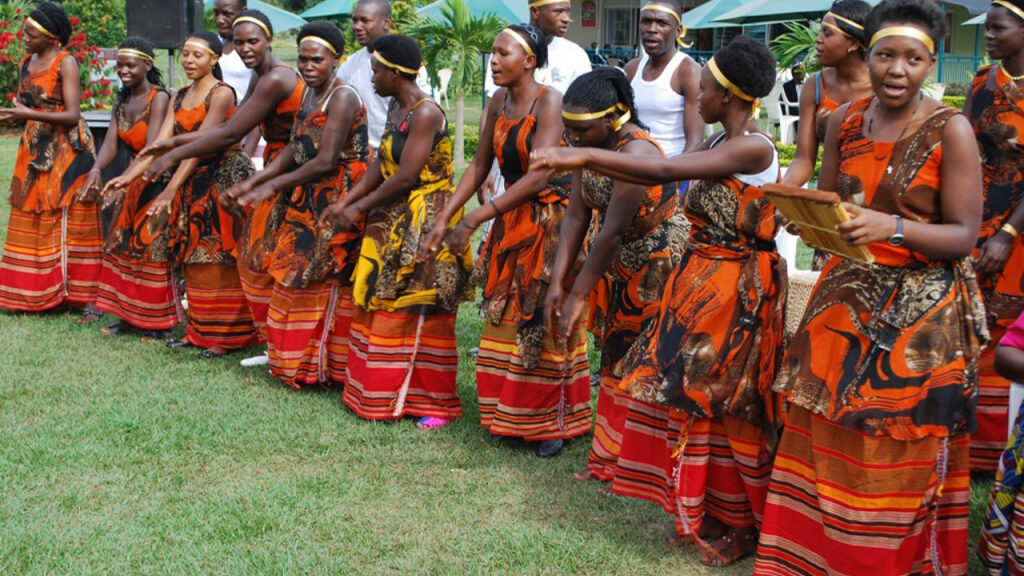
02Southwestern Uganda · AnkoleBanyankoleRunyankole · Ankole cultural heritage
Banyankole cultural dancers in traditional performance dress
HERITAGE FOCUSLong-horned cattle and pastoral heritageImage source ↗

The Banyankole are associated with the grasslands and agricultural highlands of southwestern Uganda. Historical Ankole society included pastoral Bahima and agricultural Bairu identities, but modern life, education, intermarriage and urbanisation make simple divisions inadequate. Cattle, land, family and hospitality remain powerful cultural themes.

Cattle & identity

The long-horned Ankole cow is valued for beauty, milk, lineage, ceremony and status as well as livelihood. Praise poetry and cattle names preserve detailed knowledge of colour, horn shape and ancestry.

Staple foods

Milk, ghee and eshabwe—a ghee-based sauce—are associated with pastoral food traditions. Matooke, millet, beans, groundnuts, vegetables and meat also form part of the region’s varied cuisine.

Fashion & crafts

Ceremonial clothing today includes Gomesi, kanzu and wraps, while historical materials included skins and barkcloth. Basketry, milk pots, wooden vessels and cattle-related objects reveal specialised household craftsmanship.

Music & dance

Ekitaguriro is known for movements that evoke the strength and long horns of Ankole cattle. Drums, singing, clapping and call-and-response help carry praise, courtship and community memory.

Homestead & defence

Pastoral homesteads were planned around cattle protection and family life; farming settlements reflected banana groves and cultivated hillsides. Spears, sticks and shields were historically used for herding protection and conflict.

Customs

Marriage negotiations, bridewealth, respect for elders and extended-family responsibilities have long been important, but visitors should not assume every household follows the same practice today.

03Eastern Uganda · BusogaBasogaLusoga · Kyabazinga of Busoga
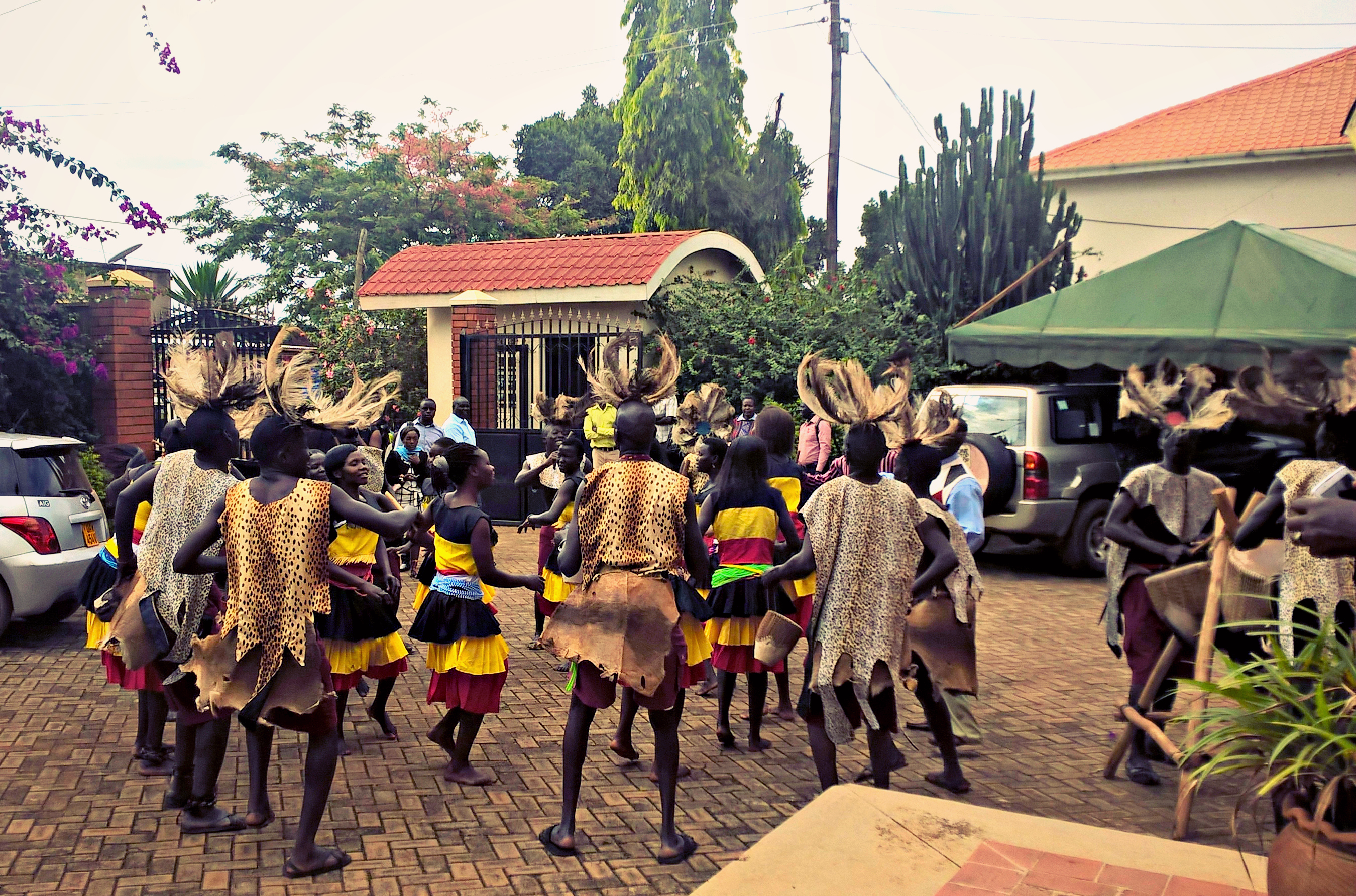
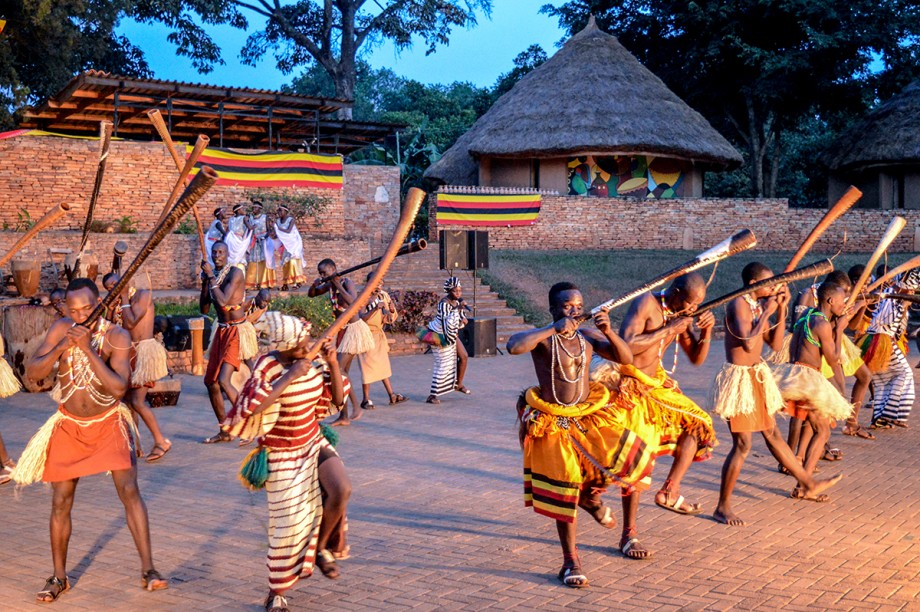
Basoga performers presenting a traditional dance in eastern Uganda
HERITAGE FOCUSThe Nile, chiefdoms and TamenhaibungaImage source ↗

The Basoga live mainly east of the Nile in Busoga, a region shaped by the river, Lake Victoria, fertile farming areas and interconnected chiefdoms. Modern Busoga recognises the Kyabazinga as a unifying cultural leader while retaining strong clan and local identities.

Clans & leadership

Clan identity influences kinship, marriage and belonging. Busoga’s political history includes several traditional chiefdoms brought into a wider cultural union rather than a single ancient centralised kingdom identical to Buganda.

Staple foods

Matooke, cassava, sweet potatoes, maize, millet, beans, groundnuts and fish are common. Communities near the Nile and lakes developed particularly strong fishing and boat traditions.

Dress & crafts

Gomesi and kanzu are widely used for formal occasions alongside contemporary clothing. Pottery, basketry, mats, fishing equipment and musical-instrument making reflect local materials and livelihoods.

Music & dance

Tamenhaibunga is one of Busoga’s best-known performance traditions. Drums, xylophones, rattles and energetic group movement accompany celebration and storytelling.

Architecture & traditional defence

Homesteads historically used circular or rectangular houses made with poles, earth and thatch. Spears, bows, shields and river knowledge supported security, hunting and defence in earlier periods.

Heritage experience

A responsible Busoga trail can connect Jinja and the Nile with chiefdom history, food, crafts, music and community interpretation rather than presenting the region only as an adventure-sports destination.

KINGS, QUEENS & ROYAL LITERATURE

The Kyabazinga, Inhebantu & Busoga chiefdoms

Busoga’s royal system grew from a federation of hereditary chiefdoms rather than copying Buganda’s political history. The Kyabazinga is the unifying cultural leader, while the Inhebantu is understood as the mother of the people.

Kyabazinga of BusogaIsebantu William Wilberforce Gabula Nadiope IV

The Kyabazinga represents unity among Busoga’s historic chiefdoms and promotes culture, education, development and regional identity.

Queen of BusogaInhebantu Jovia Mutesi

The title Inhebantu means mother of the people. Her place in the modern kingdom provides an entry point into women’s cultural leadership, family wellbeing and royal ceremony.

Former Kyabazinga and national leaderSir William Wilberforce Nadiope II

Nadiope II connects Busoga’s royal history with Uganda’s independence era and helps visitors understand how traditional leadership interacted with the emerging modern state.

04Kigezi highlands · Southwestern UgandaBakigaRukiga · Clan-based highland communities
Bakiga community dancers performing in the Kigezi highlands
HERITAGE FOCUSHighland farming and energetic danceImage source ↗

The Bakiga are strongly associated with the steep, cultivated hills of Kigezi. Their history reflects intensive farming, clan organisation, movement between hills and valleys and a reputation for energetic communal work. Modern Bakiga communities are found across Uganda, not only in their highland homeland.

Landscape & architecture

Terraces, compact homesteads and cultivated hillsides demonstrate adaptation to limited land and steep slopes. Traditional houses used timber, earth and thatch, positioned within family farming landscapes.

Staple foods

Sorghum, millet, beans, peas, sweet potatoes, Irish potatoes, vegetables and livestock products are important. Local sorghum beverages and shared meals accompany social events.

Clans & customs

Clans organise descent and marriage relationships. Extended families, respect for elders and collective labour have been important, though land pressure and urban life continue to reshape customs.

Music & dance

Kikiga dance is famous for powerful stamping, jumping and vigorous group movement. Drums, flutes, whistles and singing support performances that express strength and unity.

Fashion & crafts

Historical clothing included skins and plant-based materials; ceremonial dress now draws from wider Ugandan fashion. Basketry, pottery, carved objects and farming tools remain useful lenses into highland knowledge.

Traditional defence

Spears, shields and bows historically served defence and hunting. They should be interpreted as museum and heritage objects—not invitations to romanticise violence or ignore present-day law.

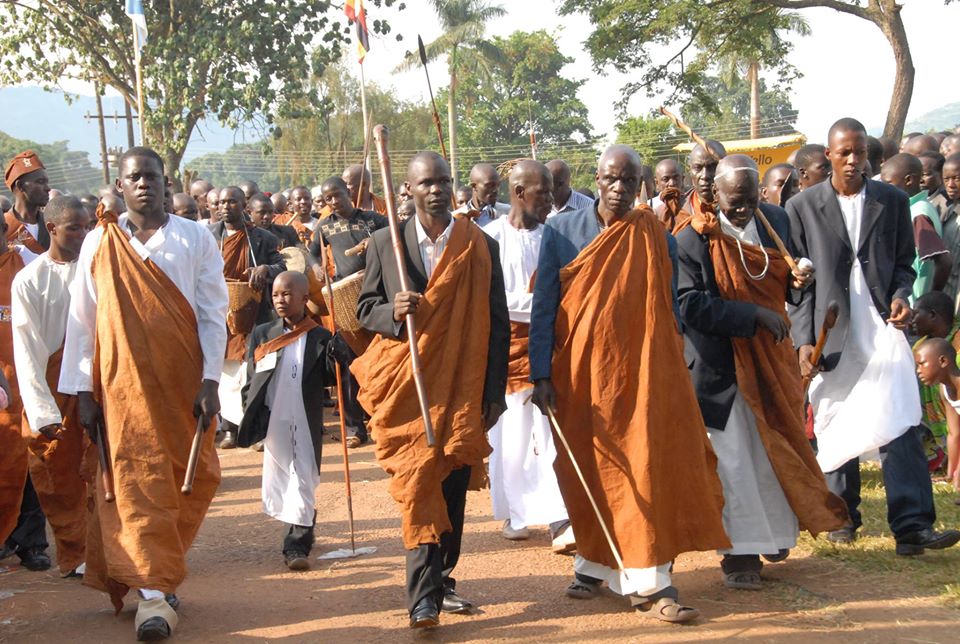
05Western Uganda · Bunyoro-KitaraBanyoroRunyoro · Omukama of Bunyoro-Kitara
Banyoro cultural procession in ceremonial dress
HERITAGE FOCUSEmpaako, kingship and ironworkingImage source ↗

The Banyoro are heirs to Bunyoro-Kitara, one of the Great Lakes region’s most influential kingdoms. Their history connects royal administration, ironworking, salt and long-distance trade, the Nile, resistance under Omukama Kabalega and modern cultural renewal around Hoima and neighbouring districts.

Clans, totems & praise names

Clans and totems organise ancestry and marriage. Empaako praise names—shared with related western Ugandan communities—express affection, respect and social identity and are recognised by UNESCO as living heritage.

Staple foods

Millet, cassava, matooke, beans, groundnuts, vegetables, fish and meat appear across regional diets. Preparation varies according to district, household, season and livelihood.

Royal culture & fashion

Royal regalia, drums, spears, barkcloth, skins and carefully controlled court objects communicated authority. Modern ceremonies combine inherited forms with contemporary Ugandan dress.

Music & ceremony

Royal drums and amakondere side-blown trumpets are connected with court performance. Empango celebrations renew loyalty and cultural memory around the Omukama’s coronation anniversary.

Architecture & technology

Royal enclosures, compounds, granaries and earth-and-thatch homes reflected social function. Bunyoro was also known for skilled iron production, salt connections and specialised crafts.

Resistance trail

Spears, bows, shields and later firearms formed part of changing military systems. A heritage route should connect Hoima, Mparo and Kabalega’s story with community voices and the consequences of colonial war.

KINGS, QUEENS & ROYAL LITERATURE

The Omukama, Omugo & Babiito royal history

Bunyoro-Kitara royal history connects the Babiito dynasty, regional power, salt and iron economies, court knowledge, colonial invasion and long resistance. The Omukama and Omugo remain cultural leaders within modern Uganda.

Omukama of Bunyoro-KitaraOmukama Solomon Gafabusa Iguru I

The reigning Omukama represents the restored kingdom and the continuity of Bunyoro’s royal institutions, cultural identity and heritage programmes.

Queen of Bunyoro-KitaraOmugo Margaret Karunga Adyeri

The Omugo’s cultural and community role offers an important way to study women’s leadership, family welfare, education and public service within the royal institution.

King and resistance leaderOmukama Chwa II Kabalega

Kabalega rebuilt Bunyoro’s political and military power and led prolonged resistance to British expansion before capture and exile. His story must be told alongside the communities affected by colonial war.

06Western Uganda · TooroBatooroRutooro · Omukama of Tooro
Tooro Kingdom Empango ceremony with royal drum and woven regalia
HERITAGE FOCUSEmpaako and Tooro royal cultureImage source ↗

The Batooro are associated with the Kingdom of Tooro around Fort Portal and the Rwenzori foothills. Their heritage shares historical and linguistic connections with Bunyoro while maintaining a distinctive kingdom, royal institutions and regional identity shaped by crater lakes, farming, cattle and mountain landscapes.

Empaako & clans

Empaako praise names are used in greeting, affection and respect and form part of a broader western Ugandan cultural system. Clan identity also guides ancestry and marriage relationships.

Staple foods

Matooke, millet bread, cassava, sweet potatoes, beans, groundnuts, vegetables, milk and meat are common, with household and ecological differences across the region.

Dress & royal heritage

Gomesi, kanzu and wraps feature in ceremonies, while barkcloth and skins belong to earlier material traditions. Royal regalia and palace etiquette communicate the continuity of the Tooro kingdom.

Music & dance

Drums, amakondere trumpets, singing and courtly performance support royal and community celebrations. Dance styles vary and should be explained by local performers rather than treated as a single fixed routine.

Architecture

Traditional family compounds used earth, timber and thatch; royal spaces were organised around authority and ceremony. Fort Portal’s modern palace landscape gives visitors an entry point into both kingdom history and living culture.

Customs & tourism

Greeting properly, using praise names appropriately and asking before photographing ceremonies show respect. Community guides can connect palace history with farms, crafts, food and Rwenzori storytelling.

KINGS, QUEENS & ROYAL LITERATURE

The Omukama, Queen Mother & Tooro royal family

Tooro’s royal story grew from its historical relationship with Bunyoro and developed its own court, rituals and identity around Fort Portal. Queens and queen mothers are essential to understanding regency, upbringing, welfare and the continuity of the crown.

Omukama of TooroOmukama Oyo Nyimba Kabamba Iguru Rukidi IV

King Oyo inherited the throne as a child and became a powerful symbol of cultural continuity. His story connects coronation, regency, youth leadership and the modern responsibilities of a cultural monarch.

Omujwera Nyina OmukamaQueen Mother Best Kemigisa Akiiki

The Queen Mother served as a defender and regent of the crown during King Oyo’s childhood and has promoted education and the empowerment of children, girls and women.

Founder of the Tooro KingdomOmukama Kaboyo Olimi I

Kaboyo’s nineteenth-century break from Bunyoro is central to Tooro’s foundation narrative and to understanding the closely connected histories of the Banyoro and Batooro.

07Northern Uganda · AcholilandAcholiAcholi (Luo) · Rwodi clan leadership
Acholi performers presenting the Bwola dance in northern Uganda
HERITAGE FOCUSClans, peace traditions and BwolaImage source ↗

The Acholi are a Luo-speaking people of northern Uganda whose cultural life is rooted in clans, extended families, agriculture, cattle, oral history and the authority of traditional chiefs known as Rwodi. Recent conflict and displacement deeply affected community life, making cultural restoration and peacebuilding important parts of the contemporary story.

Staple foods

Millet and sorghum bread, beans, simsim, groundnuts and leafy vegetables are important. Malakwang—a sour leafy vegetable preparation—and odii sesame or groundnut paste are widely associated with Acholi cuisine.

Architecture

Traditional compounds contain circular earth-walled, thatched houses arranged for family and household functions. Decorative patterns, granaries and shaded meeting spaces express both utility and identity.

Music & dance

Bwola is associated with royal or chiefly performance, Larakaraka with courtship and celebration, and Otole with historical warrior traditions. Drums, horns, rattles, flutes and song communicate history and social roles.

Fashion & adornment

Animal skins, fibres, beads and body adornment belong to historical dress traditions; present-day ceremonial costumes often adapt these materials. Everyday Acholi fashion is fully contemporary and diverse.

Traditional defence

Spears, bows, shields and organised warrior groups formed part of earlier security. Cultural performances may preserve their symbolism while modern communities emphasise reconciliation, law and peace.

Customs & research

Clan mediation, respect for elders and restorative practices such as Mato Oput are frequently studied, but they must be explained by knowledgeable custodians and not applied as stereotypes to every dispute.

08Northeastern Uganda · KaramojaKaramojongNgakarimojong and related Ateker languages · Age-set, clan and council traditions
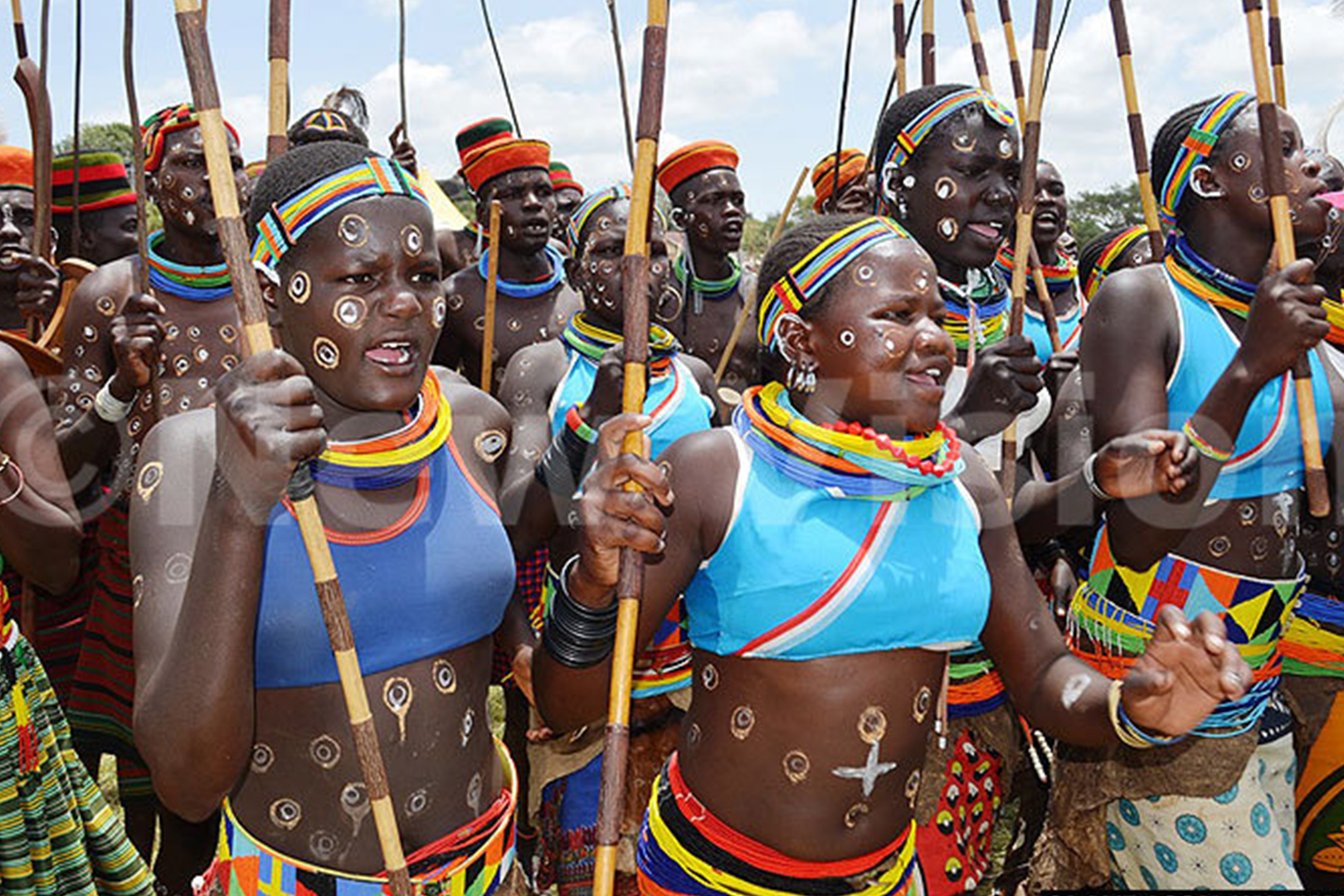
Karamojong women performing a cultural dance in Karamoja
HERITAGE FOCUSPastoralism, age sets and manyattasImage source ↗

The Karamojong are part of the wider Ateker cultural world extending across Uganda and neighbouring countries. Pastoralism, cattle, seasonal movement, age systems and communal decision-making developed in response to Karamoja’s semi-arid environment. Farming, trade, education, towns and conservation now sit alongside pastoral life.

Cattle & food

Cattle carry social, economic and symbolic importance. Sorghum, maize, beans, milk and meat are important foods; descriptions involving blood refer to particular pastoral practices and should never be used to sensationalise the community.

Manyatta architecture

Manyattas are protective settlement complexes using strong fencing, narrow entrances, homesteads and livestock spaces. Their design expresses security, family organisation and environmental knowledge.

Dress & adornment

Colourful wraps, layered beadwork, metal ornaments, hair traditions and wooden stools are visually distinctive. Styles change by age, occasion, location and personal preference.

Music & dance

Edonga and other group performances use vertical jumping, singing, clapping and rhythmic movement. Songs can communicate courtship, cattle praise, age identity, history and current concerns.

Traditional weaponry

Spears, bows, shields and herding sticks historically served livestock protection and defence. Firearms and cattle raiding caused severe harm in recent history; tourism must support peace, disarmament and lawful cultural interpretation.

Customs & ethical visits

A community visit should be arranged with consent, fair payment and clear photography rules. Visitors should meet people as contemporary citizens—not as exhibits frozen in the past.

09Mount Elgon · Eastern UgandaBamasaba / BagisuLumasaba · Inzu ya Masaba cultural institution
Bamasaba Kadodi performers during the Imbalu cultural season
HERITAGE FOCUSImbalu, Kadodi and Mount ElgonImage source ↗

The Bamasaba, widely called Bagisu in Uganda, live around Mount Elgon and across the Kenya border. Their identity is connected with highland agriculture, clans, coffee, the landscape of Masaba and the Imbalu initiation tradition, one of Uganda’s most widely recognised cultural ceremonies.

Staple foods

Malewa—smoked bamboo shoots—is a celebrated delicacy prepared with groundnuts or other sauces. Matooke, maize, beans, cassava, vegetables and coffee-growing livelihoods also shape local food culture.

Imbalu

Imbalu is a male initiation system involving public preparation, instruction, music and circumcision. It is sacred and socially complex; visitors must follow community rules, consent, health safeguards and restrictions on photography.

Music & dance

Kadodi drumming drives energetic procession and dance associated especially with Imbalu seasons. Songs communicate courage, genealogy, instruction and community judgement.

Dress & adornment

Ceremonial costumes may use skins, beads, bells, feathers or plant materials alongside modern clothing. No single costume represents how Bamasaba people dress in daily life.

Architecture & landscape

Highland homesteads, granaries and farming spaces respond to Mount Elgon’s slopes and rainfall. Coffee gardens and bamboo zones can form part of an educational cultural-and-nature route.

Clans & customs

Clan belonging influences marriage and initiation responsibilities. Cultural interpretation should include women, elders, youth and health professionals—not only the most dramatic public ceremony.

10Eastern and northeastern Uganda · TesoItesoAteso · Emorimor cultural leadership
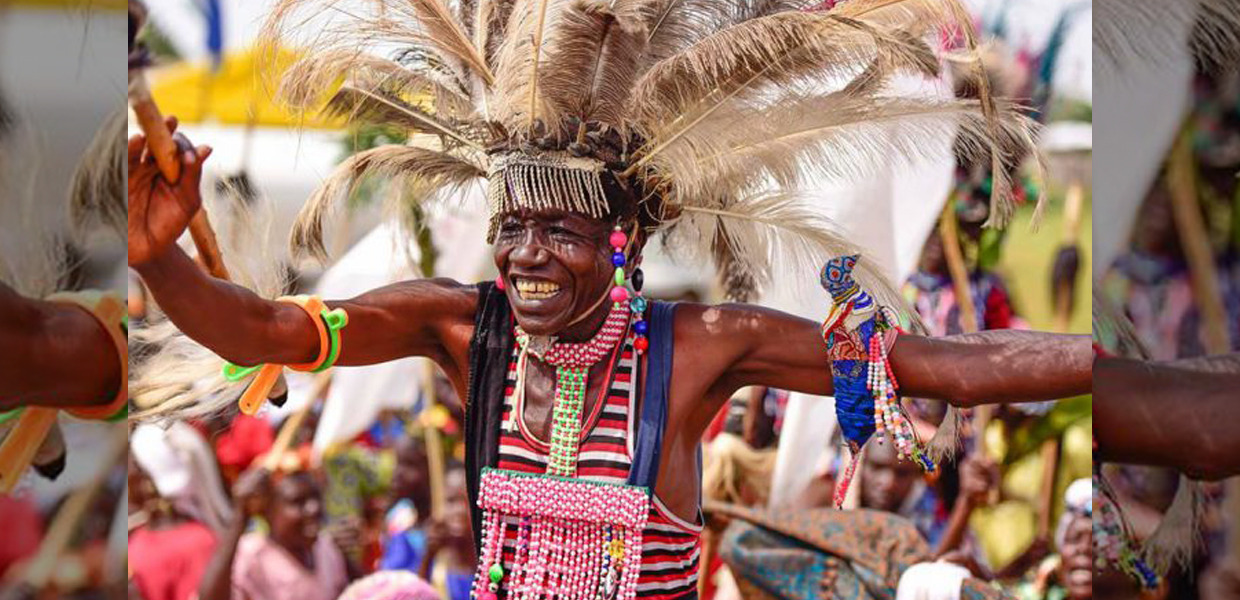
Iteso performer wearing beaded ceremonial dress
HERITAGE FOCUSAtapa, akogo and clan lifeImage source ↗

The Iteso are part of the Ateker family and live mainly across Teso in eastern Uganda, with related communities in Kenya. Their heritage includes farming, cattle keeping, clan identity, oral literature and adaptation to wetlands, open plains and changing economic conditions.

Staple foods

Atapa, commonly made from millet and cassava flours, is strongly associated with Teso and is served with vegetables, fish, meat, beans or groundnut sauce. Sorghum, sweet potatoes and cassava also support household diets.

Clans & leadership

Clan systems guide ancestry, marriage and mutual responsibility. The Emorimor provides cultural leadership and a focus for heritage renewal rather than replacing Uganda’s elected government.

Music & instruments

The akogo thumb piano, drums, rattles, horns and call-and-response singing accompany dancing and storytelling. Songs carry praise, humour, courtship, history and commentary.

Architecture

Traditional compounds used round earth-walled, thatched houses, granaries and livestock spaces. Settlement design changed through insecurity, displacement, modern materials and urban growth.

Dress & crafts

Beadwork, skins and fibre ornaments feature in historical and ceremonial presentation. Basketry, pottery, gourds, stools and agricultural tools reveal practical design knowledge.

Traditional defence & living culture

Spears, bows and shields belonged to hunting and defence, while modern heritage performances preserve selected symbols. A Teso trail should also include farms, wetlands, food, music and contemporary creativity.

11West Nile and Lake Albert regionAlurAlur (Luo) · Alur chiefdoms
Alur cultural performance featuring long traditional horns
HERITAGE FOCUSChiefdoms, adungu and river landscapesImage source ↗

The Alur are a Luo-speaking people living in northwestern Uganda and neighbouring Democratic Republic of Congo. Their cultural landscape links highlands, the Albert Nile and Lake Albert, with chiefdoms, clans, fishing, farming and long-distance interaction across a border that came later than the communities themselves.

Music & instruments

The adungu arched harp is strongly associated with Alur musical heritage and has become widely used across Uganda. Agwara horns, drums, rattles and vocal performance support ceremony, praise and dance.

Food

Millet, cassava, sorghum, beans, sesame, vegetables and fish are important, with strong differences between lakeshore, riverine and upland livelihoods.

Clans & chiefdoms

Clans and hereditary chiefdoms organise identity, land relationships and ritual authority. Cross-border kinship demonstrates why modern national boundaries do not neatly contain cultural communities.

Architecture

Circular earth-walled houses, thatch, granaries and compounds reflect climate, family organisation and available materials. Fishing settlements developed additional boat and net-making knowledge.

Dress & crafts

Historical adornment used beads, fibres, skins and metalwork; contemporary clothing varies widely. Musical-instrument construction, pottery, basketry and fishing gear are significant crafts.

Defence & heritage routes

Spears, bows and shields appear in historical accounts of hunting and defence. Responsible tourism can connect Pakwach, Nebbi and Lake Albert through music, food, fishing history and local guides.

12Southwestern forest landscapesBatwaMultiple local languages and Batwa identities · Indigenous forest communities
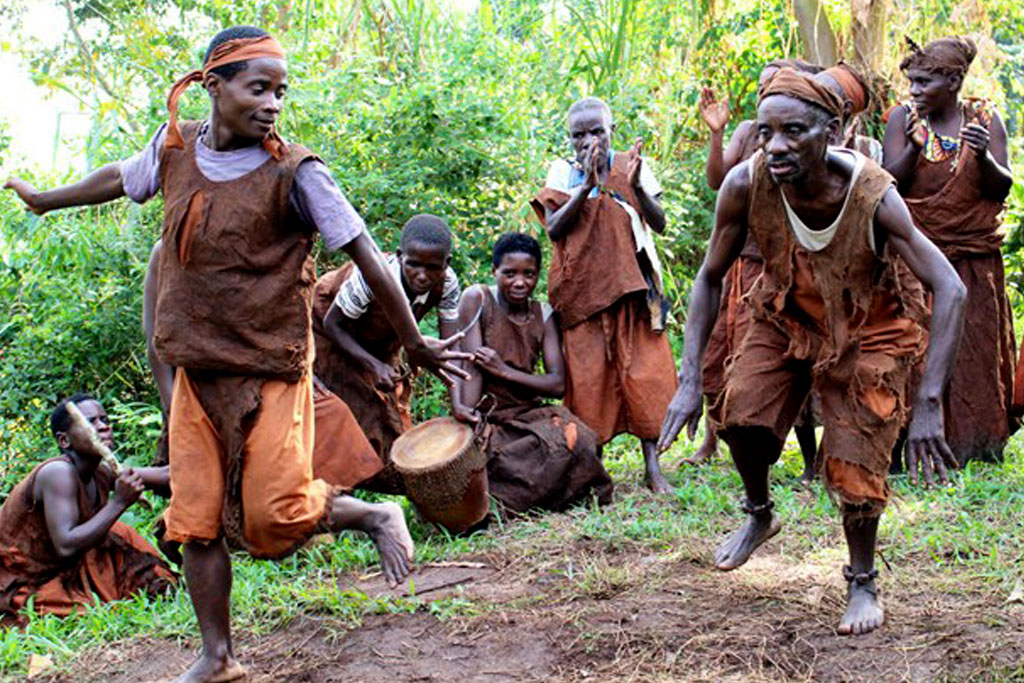
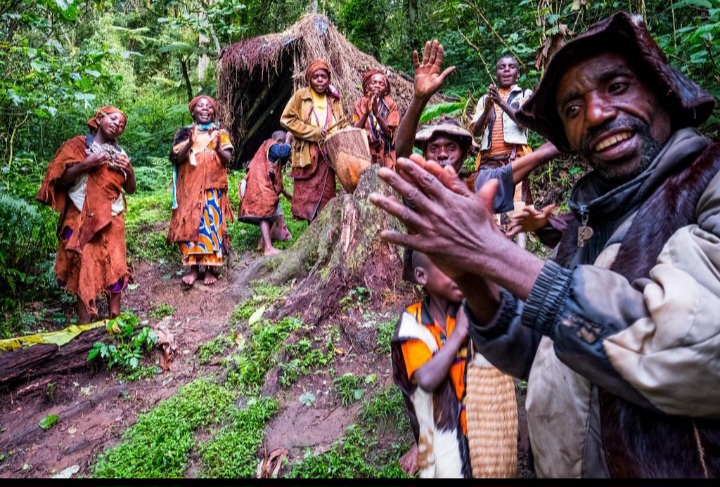
Batwa community members sharing music and dance beside a forest
HERITAGE FOCUSIndigenous forest knowledge and rightsImage source ↗

Batwa communities are among the Indigenous peoples of the Great Lakes forest region. Their histories are connected with forests now forming parts of Bwindi, Mgahinga and neighbouring protected landscapes. Conservation-related displacement and loss of access to ancestral land created lasting social and economic injustice.

Forest knowledge

Batwa knowledge includes plants, honey, animals, trails, weather and forest resources. This expertise should be recognised as intellectual and cultural heritage rather than treated as a performance invented for tourists.

Food & livelihood

Historical livelihoods included gathering, honey collection, hunting and exchange with neighbouring farming communities. Restricted forest access forced major changes in diet, settlement and income.

Homes & material culture

Temporary forest shelters and portable objects suited mobile forest life. Pottery, basketry, bows and knowledge of natural materials form part of diverse Batwa histories.

Music & storytelling

Song, dance and oral history transmit memory, identity and the experience of dispossession. Performances should be community-led and fairly paid.

Traditional hunting tools

Bows, arrows and traps belong to historical subsistence knowledge. Wildlife laws now regulate hunting, so heritage interpretation must clearly distinguish past practice from permitted activity today.

Ethical tourism

Choose programmes governed by Batwa communities, ask before taking photographs, avoid intrusive poverty tourism and ensure fees reach participants. Culture must never be used to excuse unequal treatment or loss of rights.

RESPONSIBLE CULTURAL TOURISM

Visit as a guest, not as a spectator.

  • Use trained community guides and pay agreed fees fairly.
  • Ask before photographing people, homes, rituals or sacred objects.
  • Never demand a ceremony that is not appropriate to perform.
  • Buy genuine crafts directly from recognised makers where possible.
  • Do not describe modern Ugandans as people living “in the past.”
  • Allow communities to explain their own identities and disagreements.

PEOPLE BEHIND THE JOURNEYS

Meet the figures who entered—and changed—Uganda’s story.

Open each profile to learn who the person was, why they came, what they did and why their legacy still attracts debate and research. These concise biographies are starting points: the trails connect the written record with the places and Ugandan perspectives that bring it to life.

01Soldier · IBEAC agent · colonial administratorFrederick John Dealtry Lugard1858–1945
Historical portrait of Frederick Lugard
Historical portrait of Frederick LugardImage source ↗

Frederick Lugard was a British soldier and administrator sent to Buganda in 1890 as an agent of the Imperial British East Africa Company. The company was attempting to protect its commercial and political interests while operating with limited money and personnel. Lugard established his headquarters at Old Kampala, negotiated with Kabaka Mwanga II and became deeply involved in the struggle among Protestant, Catholic and Muslim political groupings in Buganda.

His Uganda years helped extend British influence, but they also linked armed company power with local political conflict and the loss of independent decision-making. A Lugard trail therefore raises difficult questions: was he preserving order, advancing a company, building an empire—or doing all three? His reports, maps and correspondence can be compared with Buganda accounts to understand how the same events looked from different sides.

02Diplomat · special commissionerSir Gerald Herbert Portal1858–1894
Historical image of Sir Gerald Portal
Historical image of Sir Gerald PortalImage source ↗

Gerald Portal was a British diplomat who had served in Egypt and Zanzibar before the British government sent him to Uganda as special commissioner in 1893. His task was to investigate the troubled political situation, assess the future of the Imperial British East Africa Company and recommend whether Britain should withdraw or assume greater responsibility.

Portal travelled inland through the East African caravan corridor and produced recommendations supporting continued British involvement. Uganda was declared a British protectorate in 1894, shortly after his mission. Fort Portal bears his name, although the wider region has a much older Tooro history. Following Portal’s trail connects diplomacy, company rule and empire with the voices of the kingdoms and communities whose futures were being decided.

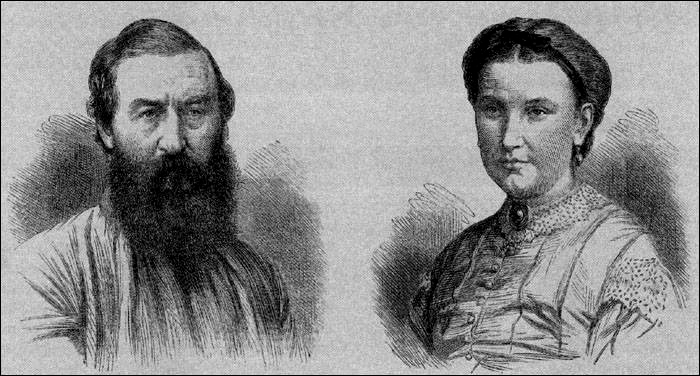
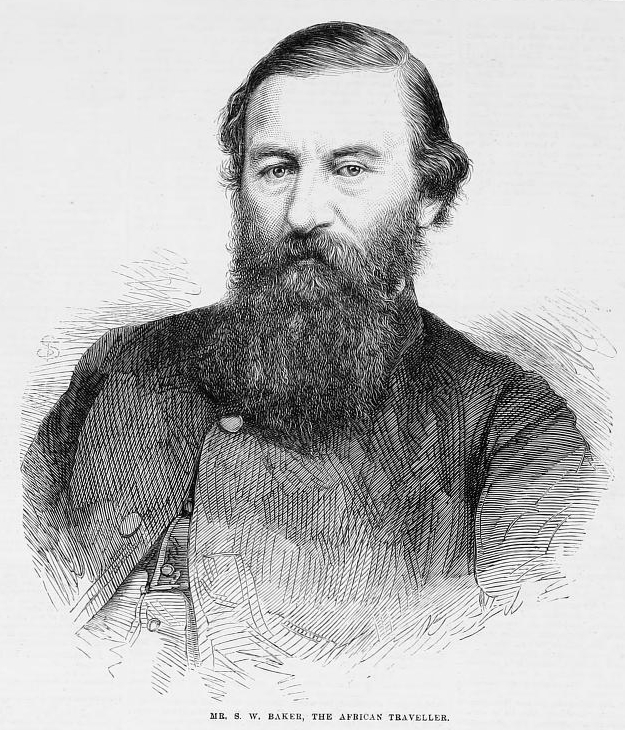
03Explorer · writer · governor of EquatoriaSir Samuel White Baker1821–1893
Historical portrait of Sir Samuel White Baker
Historical portrait of Sir Samuel White BakerImage source ↗

Samuel Baker was a British traveller, hunter and author who explored the Nile basin with Florence Baker. In 1864 they reached the great waterfall that Samuel named Murchison Falls and became the first Europeans recorded as reaching Lake Albert, which local societies already knew. Later, as governor-general of the Ottoman-Egyptian province of Equatoria, he returned with an armed expedition intended to establish authority and suppress slave trading.

In 1872 Baker occupied and strengthened the former slave-trading station at Patiko. His anti-slavery claims are important, but his military campaign, imperial ambitions and confrontations with African rulers also require examination. A Baker trail should therefore connect the dramatic Nile landscape with Bunyoro’s political history, Acholi community memory and the human suffering represented by Fort Patiko.

04Explorer · translator · expedition partnerLady Florence Baker1841–1916
Historical portrait of Lady Florence Baker
Historical portrait of Lady Florence BakerImage source ↗

Florence Baker was born in Transylvania and became Samuel Baker’s partner in some of the most demanding nineteenth-century Nile expeditions. She travelled through dangerous terrain, endured illness and conflict, used her linguistic abilities and participated in negotiations and daily expedition decisions. Contemporary accounts often treated her as a companion rather than recognising her as an explorer in her own right.

Bringing Florence forward changes the familiar story. Her experience opens research into women in exploration, translation, survival and the unequal way historical reputations were created. A journey following the Bakers should examine what Samuel published, what Florence contributed and what African women and communities experienced along the same route.

05Explorer · surveyor · soldierJohn Hanning Speke1827–1864
Historical portrait of John Hanning Speke with surveying instrument
Historical portrait of John Hanning Speke with surveying instrumentImage source ↗

John Hanning Speke was a British army officer and explorer associated with the nineteenth-century European search for the Nile’s source. He reached Lake Victoria in 1858 and returned with James Augustus Grant on an expedition of 1860–1863. After spending time at Kabaka Muteesa I’s court, Speke reached the Nile’s outflow at Jinja in 1862 and argued that the lake was the river’s principal source.

His conclusion brought international fame and controversy, especially in his disagreement with Richard Burton. Yet the phrase ‘discovery of the Nile’ can hide the knowledge of the people who had lived, travelled, fished and governed around Nalubaale for generations. The trail invites travellers to examine Speke’s maps alongside African geography, Busoga history and the environmental transformation of the former Ripon Falls area.

06Explorer · soldier · natural-history observerJames Augustus Grant1827–1892
Historical engraved portrait of James Augustus Grant
Historical engraved portrait of James Augustus GrantImage source ↗

James Augustus Grant was a Scottish soldier and explorer who accompanied Speke on the 1860–1863 expedition. He recorded plants, landscapes, communities, trade and political encounters while illness sometimes separated him from Speke. His observations added natural-history and ethnographic material to the geographical mission.

Grant is frequently reduced to Speke’s assistant, but studying his journals reveals how expeditions operated through teams, negotiated passage and depended upon African knowledge, labour and hospitality. His trail encourages researchers to compare personal diaries, published narratives and local oral history rather than accepting a single heroic account.

07Journalist · explorer · expedition leaderHenry Morton Stanley1841–1904
Historical portrait of Henry Morton Stanley
Historical portrait of Henry Morton StanleyImage source ↗

Henry Morton Stanley was a Welsh-born American journalist and explorer best known for locating David Livingstone. During his 1875 journey around Lake Victoria, Stanley visited Kabaka Muteesa I’s court and wrote enthusiastically about Buganda. A letter published through the Daily Telegraph appealed for Christian missionaries, helping encourage the Church Missionary Society expedition that followed.

Stanley’s expeditions produced geographical information and dramatic journalism, but they were also heavily armed and connected to expanding European influence. His later Emin Pasha Relief Expedition caused great loss of life and remains controversial. Following his Uganda connections allows visitors to investigate how newspapers, exploration, missionary ambition and empire reinforced one another.

08CMS missionary · engineer · printer · translatorAlexander Murdoch Mackay1849–1890
Historical portrait of Alexander Murdoch Mackay
Historical portrait of Alexander Murdoch MackayImage source ↗

Alexander Mackay was a Scottish engineer and Church Missionary Society missionary who reached Uganda in 1878. He established a workshop, taught practical skills, worked on translation and printing and participated in religious discussions at the royal court. His technical background made him different from many clergy, and his written accounts helped shape how British readers imagined Buganda.

Mackay remained during a period of intense political and religious tension. His commitment and educational work are remembered by many Christians, while some of his writings reveal dismissive attitudes toward indigenous belief and culture. Studying him responsibly means examining faith, literacy and technology together with the cultural assumptions and political consequences of missionary activity.

09Pioneer Protestant missionariesC. T. Wilson & Shergold SmithCMS party arrived in Buganda, 1877
Mackay Memorial Church representing early Church Missionary Society heritage in Uganda
Mackay Memorial Church representing early Church Missionary Society heritage in UgandaImage source ↗

The Reverend C. T. Wilson and the Reverend Shergold Smith were members of the first Church Missionary Society party sent in response to the appeal associated with Stanley’s visit to Muteesa I. They reached Buganda in 1877 after travelling through the East African interior and across Lake Victoria. Their arrival marked the beginning of an organised Protestant mission at the royal court.

The early mission was fragile and dangerous. Smith was killed later in 1877 on the Lake Victoria island of Ukerewe, while Wilson continued documenting the kingdom and mission. Their journey demonstrates that missionary history was not a simple movement from Europe to Uganda: it depended on coastal networks, African caravan workers, lake knowledge, royal permission and complex local politics.

10Missionary of Africa · Catholic priestPère Siméon Lourdel — Mapeera1853–1890
Monument to Mapeera and Brother Amans in Uganda
Monument to Mapeera and Brother Amans in UgandaImage source ↗

Siméon Lourdel was a French Catholic priest of the Missionaries of Africa, known in Buganda as Mapeera—a rendering associated with ‘Mon Père.’ He arrived with Brother Amans in 1879 and helped establish the Catholic mission in Buganda. Lourdel learned Luganda, taught converts, participated in court discussions and experienced the instability surrounding competing religious and political groups.

His legacy lives in churches, schools, monuments and family memories. His work also belongs within the larger story of African catechists and converts, including those who became the Uganda Martyrs. The trail connects Kigungu, Nabulagala, Rubaga and Namugongo while asking how a foreign mission took root through African agency and local decisions.

11Missionary of Africa · builder · practical mission workerBrother Amans — AmansiPioneer Catholic missionary, arrived 1879
Historic Mapeera Church associated with Mapeera and Brother Amans
Historic Mapeera Church associated with Mapeera and Brother AmansImage source ↗

Brother Amans travelled with Père Lourdel and was among the first White Fathers to establish a Catholic presence in Uganda in 1879. As a religious brother rather than an ordained priest, he supported the practical life of the mission through building, cultivation, organisation and the daily work required to create a permanent base.

His quieter role helps visitors look beyond famous leaders. Missions depended upon craftspeople, cooks, boat crews, messengers, translators, catechists and hosts. A Brother Amans trail can therefore interpret the physical making of early mission stations and recognise both European and African labour that formal church histories sometimes compress into a few names.

12First bishop of Eastern Equatorial AfricaBishop James Hannington1847–1885
Historical illustration of the seizure of Bishop James Hannington
Historical illustration of the seizure of Bishop James HanningtonImage source ↗

James Hannington was an Anglican missionary appointed bishop of Eastern Equatorial Africa. In 1885 he attempted to enter Buganda from the east through Busoga. The route carried political significance: Buganda traditions associated threats with an eastern approach, and Kabaka Mwanga II’s government was already under pressure from foreign religious and political interests.

Hannington and many African members of his travelling party were killed near Kyando. Christian tradition remembers his faith and martyrdom, but a responsible trail also examines the men who died with him, Mwanga’s security fears and the misunderstandings surrounding the expedition. It becomes a journey through sacrifice, power, prophecy and cross-cultural encounter rather than a one-sided heroic story.

13Kabaka of Buganda · diplomat · host of foreign visitorsKabaka Muteesa Ic. 1837–1884
Historical likeness of Kabaka Muteesa I of Buganda
Historical likeness of Kabaka Muteesa I of BugandaImage source ↗

Muteesa I ruled Buganda during an era of major regional and international change. Long-distance traders, Muslim teachers, explorers and later Christian missionaries reached his court, but they entered a sophisticated kingdom with established government, military organisation, diplomacy and spiritual traditions. Muteesa used foreign visitors strategically while protecting royal authority.

Speke, Grant and Stanley all encountered his court, and both Protestant and Catholic missions began during his reign. His choices helped shape modern Uganda, yet European accounts often cast him only as the ruler who received outsiders. A Muteesa trail restores him as an active diplomat who evaluated competing ideas, technologies and alliances on Buganda’s behalf.

14Kabaka of Buganda · ruler during religious and imperial upheavalKabaka Mwanga II1868–1903
Historical engraved portrait of Kabaka Mwanga II of Buganda
Historical engraved portrait of Kabaka Mwanga II of BugandaImage source ↗

Mwanga II inherited the throne in 1884 while still young and faced missionary factions, armed converts, company agents and growing foreign interference. His order to execute Christian pages and other converts in 1885–1886 produced the story of the Uganda Martyrs. Later conflicts removed and restored him before he resisted British power alongside Omukama Kabalega.

Mwanga remains one of Uganda’s most debated rulers. Religious accounts often portray a persecutor, while nationalist readings emphasise a king struggling to preserve sovereignty. A learning journey should not erase the martyrs or excuse violence; it should help visitors understand the severe political pressures, competing loyalties and imperial expansion surrounding his decisions.

15Omukama of Bunyoro-Kitara · military and political leaderOmukama Chwa II Kabalega1853–1923
Mparo Tombs royal heritage site associated with Omukama Kabalega
Mparo Tombs royal heritage site associated with Omukama KabalegaImage source ↗

Kabalega became Omukama of Bunyoro-Kitara in 1870 and worked to rebuild the kingdom’s military and political strength. He resisted Egyptian-linked forces and later British expansion, using mobile tactics against better-equipped opponents. His kingdom’s position near the Nile and valuable trade routes placed it at the centre of regional struggles involving explorers, soldiers and imperial projects.

British forces captured Kabalega and Mwanga II in 1899 and exiled them to the Seychelles. Kabalega was permitted to return in 1923 but died before reaching Bunyoro. Including his story prevents the explorer trails from presenting Uganda as an empty stage: visitors encounter an African sovereign who understood the threat to his state and organised prolonged resistance.

One biography should lead to another question.

What did the visitor record? What did the kingdom understand? Whose labour made the journey possible? Which voices were excluded from the published book? Uganda Historical Expeditions invites travellers, descendants, students and researchers to investigate these questions on the ground.

01ADMINISTRATION · COMPANY HISTORY

Frederick Lugard & IBEAC Trail

Examine Lugard’s work for the Imperial British East Africa Company, the political and religious divisions he encountered in Buganda, and the changing relationship between the company, the kingdom and Britain.

MombasaCaravan routeOld Kampala
  • Old Kampala and the history of Fort Lugard
  • Buganda’s court, faith communities and political divisions
  • IBEAC maps, correspondence and company records
02DIPLOMACY · PROTECTORATE HISTORY

Sir Gerald Portal Mission Trail

Reconstruct Portal’s 1893 mission and explore how his journey, reports and encounters in Buganda influenced Britain’s decision-making at the end of company administration.

ZanzibarMombasaBuganda
  • Selected Kenya–Uganda caravan-route locations
  • Fort Portal connections and commemoration
  • Private family, diplomatic and research journeys
03FORTS · NILE · ANTI-SLAVERY HISTORY

Samuel & Florence Baker Trail

Follow the Nile through Bunyoro and northern Uganda while examining the Bakers’ expedition, Omukama Kabalega’s kingdom, slave-trade networks and the communities whose lives intersected with these events.

MasindiMurchison FallsFort Patiko
  • Murchison Falls and historic Nile viewpoints
  • Bunyoro history and African resistance
  • Fort Patiko’s slave-trade and garrison landscape
04GEOGRAPHY · SOURCE OF THE NILE

Speke & Grant Expedition Trail

Connect the Royal Geographical Society era with the Great Lakes, Kabaka Muteesa I’s court and the long history of African geographical knowledge surrounding Nalubaale and the Nile.

KaragweBugandaJinja & Nile
  • Archival maps and expedition debates
  • Buganda’s role in the journey
  • Source of the Nile and Busoga perspectives
05EXPLORATION · JOURNALISM · EMPIRE

Henry Morton Stanley Trail

Trace Stanley’s Great Lakes encounters, his time in Buganda and the writings that connected exploration, journalism, missionary interest and imperial expansion.

Lake VictoriaMuteesa I’s courtNorthern lake route
  • Exploration achievements and controversies
  • African guides and royal diplomacy
  • The missionary invitation in historical context
06PROTESTANT MISSION HISTORY

Church Missionary Society Trail

Follow the early CMS story through Shergold Smith, C. T. Wilson, Alexander Mackay and later Anglican leaders, while centring African teachers, converts and the difficult encounters around Kabaka Muteesa I’s court.

Lake routeBuganda courtNamirembe
  • Mackay heritage and early printing
  • Namirembe and Anglican history
  • Uganda Martyrs and African Christian leadership
07CATHOLIC MISSION HISTORY

Mapeera & White Fathers Trail

Follow Père Siméon Lourdel—Mapeera—and Brother Amans from their arrival through early Catholic mission sites, Buganda’s court, Rubaga and the story of the Uganda Martyrs.

KigunguNabulagalaRubaga
  • Missionaries of Africa heritage
  • Early Catholic communities and African catechists
  • Private pilgrimages for families and church groups
08PILGRIMAGE · EASTERN APPROACH

Bishop Hannington Trail

Explore Hannington’s approach from the East African coast, his final journey through Busoga, the men travelling with him and the later development of Uganda’s Anglican Church.

MombasaEastern UgandaBusoga
  • Cross-border Kenya–Uganda pilgrimage planning
  • Faith, misunderstanding and sacrifice
  • Community interpretation of the historical landscape
Stone ruins of Fort Patiko in northern Uganda
Fort Patiko · Northern Uganda Image and community-history source ↗

FORTS & HISTORICAL LANDSCAPES

Read the fort through the people who lived around it.

Our fort journeys will examine construction, military occupation, trade, forced movement and local memory. Fort Patiko is presented not simply as “Baker’s Fort,” but as a landscape connected with earlier slave and ivory trading, Baker’s later occupation, subsequent administrations and enduring Acholi community histories.

Additional fort and mission-site trails will only be published after route inspection, access confirmation and consultation with cultural custodians and recognised historians.

BESPOKE GENEALOGY & RESEARCH TOURISM

Follow Your Ancestor to Uganda

Share a relative’s name, diary, letter, photograph, military record, missionary society or company connection. We will help turn documented links into a private itinerary with relevant sites, local historians, archival-map comparisons, photography and a personalised expedition journal.

  • Descendants and family associations
  • Churches and missionary societies
  • Universities, geographers and historians
  • Museums, archives and specialist groups
RESEARCH & OUTREACH CONNECTIONS

Potential collaboration includes the Royal Geographical Society, Church Mission Society, Missionaries of Africa, SOAS University of London, Oxford’s Bodleian Libraries, The National Archives, universities and family-history societies. The Imperial British East Africa Company no longer operates; its surviving correspondence and company papers are research resources held in archives, including SOAS.

Routes are reconstructed from historical records and adjusted after field verification, permissions, current access and community consultation.

DESTINATIONS

Ten places.
Endless stories.

From misty gorilla forests to open savannah, islands, waterfalls and city culture—discover the highlights, then let Muzunguka Safaris turn your favourites into one seamless journey.

Mountain gorilla in Bwindi Impenetrable National Park in southwestern Uganda
01Southwestern Uganda

Bwindi Impenetrable

UNESCO-listed ancient rainforest and Uganda’s celebrated mountain-gorilla trekking destination.

  • 120+ mammal species
  • 350+ bird species
  • Gorilla trekking & forest walks
Discover Bwindi Impenetrable
Victoria Nile and wildlife boat safari in Murchison Falls National Park Uganda
02Northwestern Uganda

Murchison Falls

Uganda’s largest national park, where the Victoria Nile is driven through a narrow gorge before a dramatic plunge.

  • Nile boat cruises
  • Elephants, giraffes & lions
  • Powerful 45 m waterfall
Discover Murchison Falls
Wildlife and Kazinga Channel landscape in Queen Elizabeth National Park Uganda
03Western Uganda

Queen Elizabeth

A richly varied landscape of savannah, crater lakes and wetlands, famous for Ishasha’s tree-climbing lions.

  • Kazinga Channel cruises
  • 95+ mammal species
  • 600+ recorded bird species
Remote savannah and wildlife landscape representing Kidepo Valley National Park Uganda
04Northeastern Uganda

Kidepo Valley

A remote wilderness of rugged mountains and sweeping savannah, prized for uncrowded big-game viewing.

  • 77+ mammal species
  • 476 recorded bird species
  • Narus Valley game drives
Chimpanzee tracking beneath the tropical forest canopy in Kibale National Park Uganda
05Western Uganda

Kibale Forest

A green primate stronghold best known for chimpanzee tracking beneath a magnificent tropical forest canopy.

  • Chimpanzee tracking
  • Exceptional primate diversity
  • Bigodi wetland walks nearby
Savannah wildlife representing a safari in Lake Mburo National Park Uganda
06Western Uganda

Lake Mburo

Uganda’s compact savannah gem—excellent for close wildlife encounters on foot, by vehicle, bicycle or boat.

  • Zebras & Uganda’s impalas
  • 315+ bird species
  • Walking and boat safaris
Hikers overlooking volcanic mountain landscapes in southwestern Uganda
07Kisoro, Southwestern Uganda

Mgahinga Gorilla

Uganda’s smallest national park protects mountain gorillas, golden monkeys and three spectacular Virunga volcanoes.

  • 33.7 km² park
  • Golden monkey tracking
  • Volcano hiking
River and green landscape representing Jinja and the River Nile in eastern Uganda
08Eastern Uganda

Jinja & the Nile

Uganda’s adventure capital, set beside the Nile and known for river experiences, heritage and lively weekend escapes.

  • Source of the Nile area
  • Rafting & boat trips
  • Historic town experiences
Forested islands and blue waters of Lake Victoria near the Ssese Islands Uganda
09Lake Victoria

Ssese Islands

An archipelago of forested islands, beaches and fishing communities offering a slower side of Uganda.

  • Island and beach stays
  • Forest walks & birding
  • Boat and cultural experiences
Ugandan culture and heritage representing Kampala city experiences
10Central Uganda

Kampala City

Uganda’s energetic capital blends royal heritage, faith landmarks, markets, food, music and contemporary culture.

  • Kasubi Tombs & royal heritage
  • Markets, museums & cuisine
  • Gateway to Uganda

DESTINATION 01 · SOUTHWESTERN UGANDA

Bwindi Impenetrable
National Park.

An ancient, mist-covered rainforest on the edge of the Albertine Rift—globally treasured for its biodiversity and unforgettable mountain-gorilla encounters.

📍

Location

Southwestern Uganda, on the edge of the Albertine Rift and close to Rwanda and the Democratic Republic of Congo.

🌍

World Heritage

Inscribed as a UNESCO World Heritage Site in 1994 for its exceptional biodiversity and conservation importance.

🦍

Mountain Gorillas

One of the world’s most important mountain-gorilla refuges and the setting for Uganda’s best-known wildlife experience.

🌳

Ancient Rainforest

A biologically rich forest dating back more than 25,000 years. “Bwindi” evokes the dense, impenetrable vegetation.

🐘

Wildlife

More than 120 mammal species, including forest elephants, chimpanzees, forest hogs and several monkey species.

🐦

Birding

More than 350 bird species, including many Albertine Rift endemics sought by birdwatchers from around the world.

🦋

Plants & Butterflies

Over 160 tree species, more than 100 fern species and a remarkable diversity of butterflies.

🌦️

Weather & Packing

Cool, humid and often misty. Rain can fall throughout the year, so bring sturdy footwear and waterproof clothing.

⛰️

Altitude

The park rises from roughly 1,160 to 2,607 metres. Trails can be steep, muddy and physically demanding.

🚗

Getting There

Allow a full day by road from Kampala or Entebbe. Domestic flights to nearby airstrips can shorten the journey.

👥

People & Culture

Community experiences share Batwa forest heritage and the hospitality, farming, crafts, dance and stories of neighbouring communities.

🥾

What to Do

Gorilla trekking, birdwatching, guided forest and waterfall walks, photography and respectful community visits.

EVERY CARD CAN BEGIN A JOURNEY

Ready to experience Bwindi?

Ask Muzunguka Safaris to arrange permits, transport, accommodation, guiding and a personalised Uganda itinerary.

Plan My Bwindi Safari →
Victoria Nile boat journey toward Murchison FallsDESTINATION 02 · NORTHWESTERN UGANDA

WHERE THE NILE MEETS THE WILD

Murchison Falls
National Park.

Uganda’s largest national park combines the dramatic Nile waterfall, broad savannah, river wildlife and rewarding game viewing. Use the planning notes below, then open the full Murchison guide for a deeper look.

45 m waterfall · 8 m gorgeVictoria Nile boat cruisesElephants, giraffes & lionsHippos & Nile crocodiles556 recorded bird speciesBudongo Forest nearby
01 · SCALE

Uganda’s largest national park

UWA lists Murchison Falls National Park at approximately 3,840 km². The Nile divides the park into northern savannah and more wooded southern landscapes.

02 · THE FALLS

See it from river and land

A boat journey approaches the base of the falls, while the top viewpoint reveals the Nile forcing through the narrow gorge. These are separate experiences worth planning together.

03 · HOW LONG

Allow two or three nights

A comfortable visit usually includes game drives, a Nile boat cruise and the top of the falls. Add time for birding, fishing or nearby Budongo Forest.

04 · GETTING THERE

Road or domestic flight

UWA places the park about 305 km north of Kampala. The southern gate is roughly four to five hours by road, with additional driving to many lodges and wildlife areas.

05 · BEST TIME

A year-round destination

Drier periods generally make game viewing and road travel easier. Wetter months bring greener scenery, dramatic skies and strong birding, but some tracks may be muddy.

06 · CURRENT FEES

Confirm before travelling

UWA currently lists entry from US$45 for foreign non-residents, US$35 for foreign residents and UGX25,000 for East African citizens. Vehicles and activities cost extra.

07 · WHAT TO PACK

Prepare for sun and spray

Bring neutral clothing, hat, sunscreen, insect repellent, binoculars, camera protection, drinking water, a light rain jacket and sturdy shoes for the falls viewpoint.

08 · WILDLIFE ETIQUETTE

Follow your guide

Stay inside the vehicle unless instructed, keep a safe distance, never feed animals, avoid loud noise and keep hands inside the boat around hippos and crocodiles.

INFORMATION CHECKED · AUGUST 2026

Fees, boat schedules, park access and road conditions can change. Confirm current arrangements before departure.

Check the official UWA park information ↗

DESTINATION 03 · WESTERN UGANDA

Queen Elizabeth
National Park.

Use this visitor guide to understand the park’s landscapes, wildlife, activities, practical planning and responsible-safari rules before you travel.

Wildlife and boat safari in Queen Elizabeth National Park, Uganda

SAVANNAH · WETLANDS · CRATER COUNTRY

A classic Uganda safari with many stories in one park.

Search for elephants, buffaloes, Uganda kobs and lions on the plains, cruise the wildlife-rich Kazinga Channel and travel south to Ishasha for the chance to see its famous tree-climbing lions.

📍

Location & Size

Queen Elizabeth National Park lies in western Uganda between Lakes Edward and George, with the Rwenzori Mountains rising beyond its northern landscapes. Uganda Wildlife Authority lists the park at approximately 1,978 km².

Because the park covers several sectors, travel time inside it can be longer than expected. Your lodge and activities should be chosen together to avoid spending too much of the safari day on transfers.

🗺️

Why It Is Special

Savannah, wetlands, forests, crater lakes and volcanic features create many habitats within one protected landscape. This diversity supports mammals, primates, reptiles and an exceptional number of birds.

A visitor can experience very different scenery in a single journey—from the open Kasenyi Plains and Kazinga Channel to Kyambura Gorge, crater country and the remote Ishasha sector.

🦁

Tree-climbing Lions

The southern Ishasha sector is celebrated for lions that are sometimes seen resting in the broad branches of fig trees. The behaviour offers a remarkable photographic experience when conditions are favourable.

These lions move freely and sightings are never guaranteed. Allow enough time for Ishasha, travel with an experienced guide and avoid pressuring or crowding resting animals.

🚤

Kazinga Channel

The natural channel links Lakes George and Edward. A guided cruise can reveal hippos, Nile crocodiles, elephants, buffaloes and large gatherings of waterbirds along its banks.

Boat departures and availability can change, so reserve a preferred time before arrival. Carry sun protection, binoculars and a camera strap, and always follow the crew’s safety instructions.

🐘

Wildlife

The park protects more than 95 mammal species, including elephants, buffaloes, lions, leopards, Uganda kobs, warthogs, hippos and several primates.

Early mornings and late afternoons are often comfortable for game drives. Wildlife remains unpredictable, so a slower pace and patient observation usually create a better experience than rushing between sightings.

🐦

Birding

More than 600 bird species have been recorded across the park’s savannah, forest, lake and wetland habitats. Migratory species add further variety mainly from November to April.

Tell us whether you are a casual bird lover or a dedicated birder. That helps us arrange an appropriate guide, allow longer observation time and select the most rewarding habitats.

🌋

Crater Country

The crater landscape records the region’s volcanic history through explosion craters, salt lakes, rolling grasslands and sweeping viewpoints. It offers a striking contrast to the park’s main plains.

Road and visibility conditions vary with the weather. A guided crater drive helps visitors understand both the geology and the communities whose lives are connected to this landscape.

🧂

Lake Katwe

Lake Katwe is known for traditional salt production and generations of human history. A respectful community visit can explain how salt has shaped local work, trade and identity.

Arrange the experience through a recognised guide, ask permission before photographing people and buy local products fairly when appropriate. Conditions can be hot, so carry water and sun protection.

🐒

Kyambura Gorge

Kyambura is a forested gorge set dramatically within the surrounding savannah. It is known for guided chimpanzee tracking and encounters with other forest wildlife.

Tracking normally requires a separate permit, suitable footwear and advance planning. Chimpanzees move naturally through dense habitat, which means observation can be rewarding but is not guaranteed.

🚙

What to Do

Visitors can enjoy guided game drives, Kazinga Channel cruises, birdwatching, crater exploration, photography and carefully arranged cultural or community experiences.

Trying to cover every activity in one day creates a rushed safari. Choose two or three priorities and allow quiet time for observation, meals, rest and unexpected wildlife encounters.

☀️

When to Visit

The park welcomes visitors throughout the year. June to September and December to February are generally drier, while wetter months bring greener scenery, dramatic skies and rewarding birdlife.

Rain can occur in any season and some tracks may become muddy. Pack for changing conditions and ask about current road access shortly before departure.

⏱️

How Long to Stay

Two or three nights usually allow time for a game drive and Kazinga Channel cruise without making the visit feel hurried. The right duration depends on arrival and departure times.

Add another night if you want Ishasha, Kyambura Gorge, dedicated birding or a slower photography programme. A longer stay also creates flexibility if weather affects an activity.

🚗

Getting There

Most visitors arrive by road from Kampala, Entebbe, Kibale or Bwindi. Travel time depends on the chosen park gate, traffic, road conditions and lodge location.

Domestic air connections can shorten the journey for some itineraries. Muzunguka Safaris can compare road and flight options after considering your schedule, group size and budget.

🏕️

Where to Stay

Accommodation ranges from simple camps to luxury lodges around Mweya, Kyambura, Kasenyi and Ishasha. Each area offers different access to activities and wildlife-viewing routes.

Selecting a lodge only by price can create long transfers. We recommend balancing comfort, location, meal arrangements and the experiences you most want to enjoy.

🎟️

Park Fees & Activities

UWA currently lists entry from US$40 for foreign non-residents, US$30 for foreign residents and UGX20,000 for East African citizens. These figures should be checked again before booking.

Vehicle entry, boat cruises, guiding and chimpanzee permits may be charged separately. Your quotation should clearly show which park and activity costs are included.

🎒

What to Carry

Pack neutral lightweight clothing, a hat, sunscreen, insect repellent, binoculars, camera, reusable water bottle and a light rain jacket. A warm layer is helpful for early starts.

Keep valuable equipment protected from dust, rain and boat spray. Soft-sided luggage is easier to handle in safari vehicles, and a small daypack keeps essentials close.

🩺

Health Preparation

Comprehensive travel insurance is strongly recommended, including medical treatment and evacuation. Visitors should consult a qualified travel-health professional about vaccinations and malaria prevention.

Carry personal medicine in its original packaging and bring enough for the journey. Inform us privately about allergies, dietary needs or medical conditions that may affect your activities.

👨‍👩‍👧

Families & Accessibility

Game drives and boat cruises can work well for families, but some activities have minimum-age or fitness requirements. Chimpanzee tracking may not be suitable for younger children.

Tell us the children’s ages and any mobility, sensory or medical needs before booking. We can adjust driving hours, accommodation and activities to make the journey more comfortable.

🦒

Responsible Viewing

Remain inside the vehicle unless your guide gives permission, keep noise low and never feed or chase wildlife. Follow ranger instructions on both land and water.

Do not litter, remove plants or purchase wildlife products. Respect local communities, request consent before photographing people and support experiences that protect dignity.

🔭

Wildlife Is Wild

Tree-climbing lions, leopards, chimpanzees and other animals move freely through natural habitats. No responsible guide can promise a particular sighting.

Approach the safari with curiosity rather than a checklist. Landscapes, birds, tracks, behaviour and smaller species often become some of the journey’s most memorable discoveries.

🧭

Combine Your Journey

Queen Elizabeth combines naturally with Kibale for chimpanzees, Bwindi for mountain gorillas, the Rwenzori region and Lake Mburo National Park.

A well-paced circuit reduces backtracking and balances long drives with activities. Share your available days and main interests so we can arrange the destinations in a sensible order.
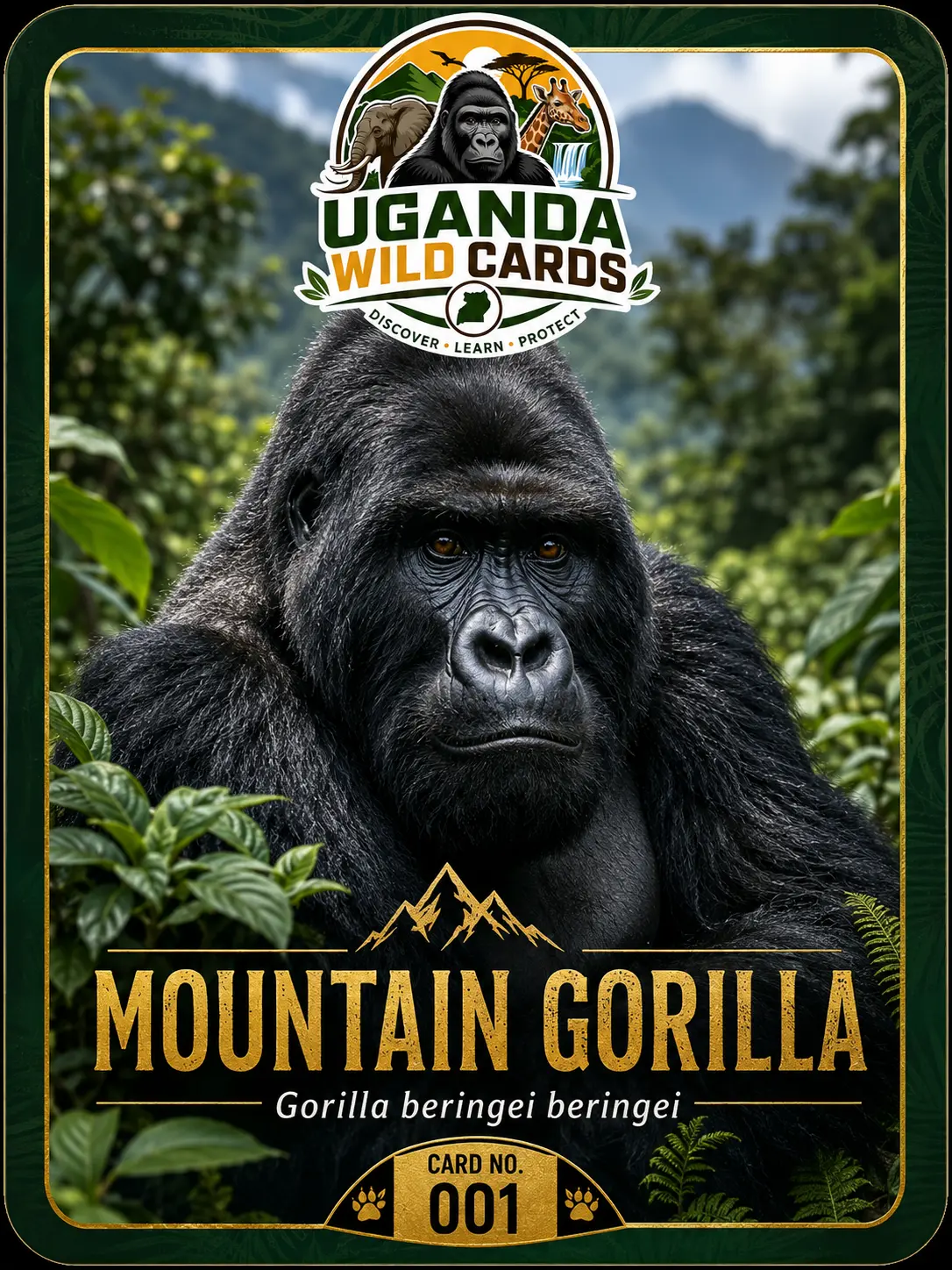
BEFORE YOU CONFIRM

Build the day around your priorities.

Tell us whether your main interest is lions, birds, photography, the Kazinga Channel, chimpanzees or family-friendly activities. We can then choose the right park sector, lodge location and length of stay.

INFORMATION CHECKED · AUGUST 2026

Park fees, activity schedules, road conditions and wildlife access can change. Confirm final arrangements with Muzunguka Safaris and check the latest Uganda Wildlife Authority information before departure.

Read the official UWA park guide ↗

FROM THE KAZINGA CHANNEL TO ISHASHA

Ready to explore Queen Elizabeth?

Muzunguka Safaris can combine game drives, a boat cruise, accommodation, professional guiding and onward travel into one personalised itinerary.

THE UGANDA WILD SHOP

Carry Uganda’s story home.

Discover meaningful Ugandan gifts, educational products and safari-inspired keepsakes—created for travellers, schools, families, children and collectors.

Premium Uganda Wild Cards educational wildlife deck with gorilla, grey crowned crane and elephant cards
🃏Cards & learning

Uganda Wild Cards

Collectible 52-card educational decks celebrating Uganda’s wildlife, birds, natural wonders and living heritage.

Forest green gorilla T-shirt and cream grey crowned crane T-shirt inspired by Uganda
👕Apparel

Wildlife & Bird T-shirts

Wear Uganda’s wild story through distinctive animal and bird designs created for travellers, families and wildlife lovers.

Forest green and khaki safari caps with embroidered Ugandan wildlife designs
🧢Apparel

Safari Caps

Practical Uganda Wild Cards headwear made for sunny safari days, outdoor adventures and memorable journeys.

Uganda wildlife mugs featuring a mountain gorilla and grey crowned crane
Gifts

Wildlife Mugs

Useful keepsakes featuring Uganda’s remarkable species—a warm reminder of the Pearl of Africa with every cup.

Framed Uganda wildlife art prints featuring a gorilla, grey crowned crane and elephant
🖼️Art & education

Posters & Art Prints

Colourful wildlife artwork and educational displays for classrooms, children’s rooms, offices and travel spaces.

Close-up of the Tulambuleyo Uganda safari board game with national parks, natural resources, two dice and game money
🎲Games

Tulambuleyo

Travel across Uganda buying game-park and natural-resource spaces, collecting game money and facing safari challenges. A screen-free adventure that teaches families, schools and travellers about wildlife, culture and conservation.

Woman wearing an elegant emerald-green and gold Ugandan Gomesi with traditional pointed sleeves and sash
Culture & Heritage

The Story of the Gomesi

The Gomesi, also known as the Busuuti, is one of Uganda’s most treasured traditional dresses. Its modern form is linked to early twentieth-century Buganda and the tailor Gomes. Worn at weddings, introductions and celebrations, it represents dignity, beauty and cultural pride.

Children’s Uganda wildlife activity books with animal matching, maze, observation and colouring activities
📚Learning

Children’s Activity Books

Fun, screen-free activities that help children discover Ugandan animals, birds, habitats and conservation through play.

40%

PURCHASE WITH PURPOSE

Your purchase carries the story forward.

Forty percent of Uganda Wild Cards profits is dedicated to empowering street-connected children and youth.

INTERNATIONAL ORDERS

Carry Uganda’s story
across the world.

Uganda Wild Cards can be requested for delivery to the United Kingdom, United States, Europe and many other destinations. Every parcel is quoted individually and sent from Kampala using an available tracked postal or express-courier service.

Order with confidence. Before payment, we send a written quotation showing the product cost, tracked delivery charge and total payable. Never send money before receiving confirmation from our official contact.

01PERSONAL ORDER

Explorer Bundle

1 deck

A meaningful Ugandan souvenir and educational wildlife collection for one traveller or collector.

03EDUCATION & GIFTS

School Bundle

10 decks

For classrooms, wildlife clubs, community groups, libraries and educational gift programmes.

04RETAIL & PARTNERS

Wholesale Order

25+ decks

Volume quotations for gift shops, museums, tourism partners, schools, charities and international stockists.

HOW INTERNATIONAL DELIVERY WORKS

  1. Choose your quantitySelect a bundle or request a custom, school or wholesale quantity.
  2. Share the destinationSend the recipient’s full name, country, city, postal code, email and telephone number. We only request the street address when confirming the order.
  3. Receive a written quotationWe confirm stock, parcel weight, tracked carrier, product cost, delivery charge, estimated dispatch time and total payable.
  4. Confirm and payPayment instructions are issued after you approve the quotation. The order is prepared once payment is confirmed.
  5. Track your parcelWe package the cards securely, complete the customs declaration and send your tracking number after dispatch.

Customs and taxes: International parcels must be declared at their true product value. The destination country may charge import VAT, customs duty, handling or clearance fees. Unless the quotation expressly says otherwise, these charges are paid by the recipient and are not included in our delivery price.

DELIVERY OPTIONS

Tracked post or express courier

Depending on destination and availability, quotations may compare Uganda Post/EMS with an international express courier such as DHL. Express service is usually faster; postal service may be more economical.

DELIVERY TIMES

Estimated after your address is checked

Transit times vary by country, carrier, customs clearance and season. Your quotation will include the current carrier estimate, but border or customs delays can occur after dispatch.

PACKAGING & TRACKING

Protected for the journey

Decks are packed to reduce crushing and moisture exposure. We send the carrier name and tracking reference so you can follow the parcel.

GIFTS, SCHOOLS & WHOLESALE

Custom quantities welcomed

Ask about multi-address gifts, classroom quantities, charity programmes or resale orders. Larger orders may require a separate commercial-shipping quotation.

INTERNATIONAL ORDER QUESTIONS

Can you give one worldwide shipping price?+

No. Carrier prices depend on destination, parcel weight, dimensions and service level. We calculate the actual tracked-delivery charge before payment.

Will I pay customs charges?+

Possibly. Import VAT, duty and handling rules differ by country and can change. The receiving customs authority or carrier decides whether charges apply.

Can I send the cards as a gift?+

Yes. Give us the recipient’s correct delivery details and tell us it is a gift. Customs declarations must still show accurate contents and value; a customer purchase cannot be falsely declared as a private gift.

What if tracking shows a customs delay?+

The recipient should respond quickly to any request from the carrier or customs office. We can provide the shipment reference and commercial information supplied at dispatch.

How do I start an order?+

Use any bundle button to open WhatsApp, or email info@ugandawildcards.com. We will confirm availability and send the full quotation before requesting payment.

DESIGN YOUR TOUR

Begin your custom
Uganda journey.

Uganda’s wildlife, landscapes and cultures offer something for every traveller. Tell Muzunguka Safaris what excites you, and our local team will create a personalised private or group itinerary around your interests, dates and budget.

01TRAVEL GUIDE

Visa Information

Check Uganda’s entry requirements early and travel with every document you may need at the border.
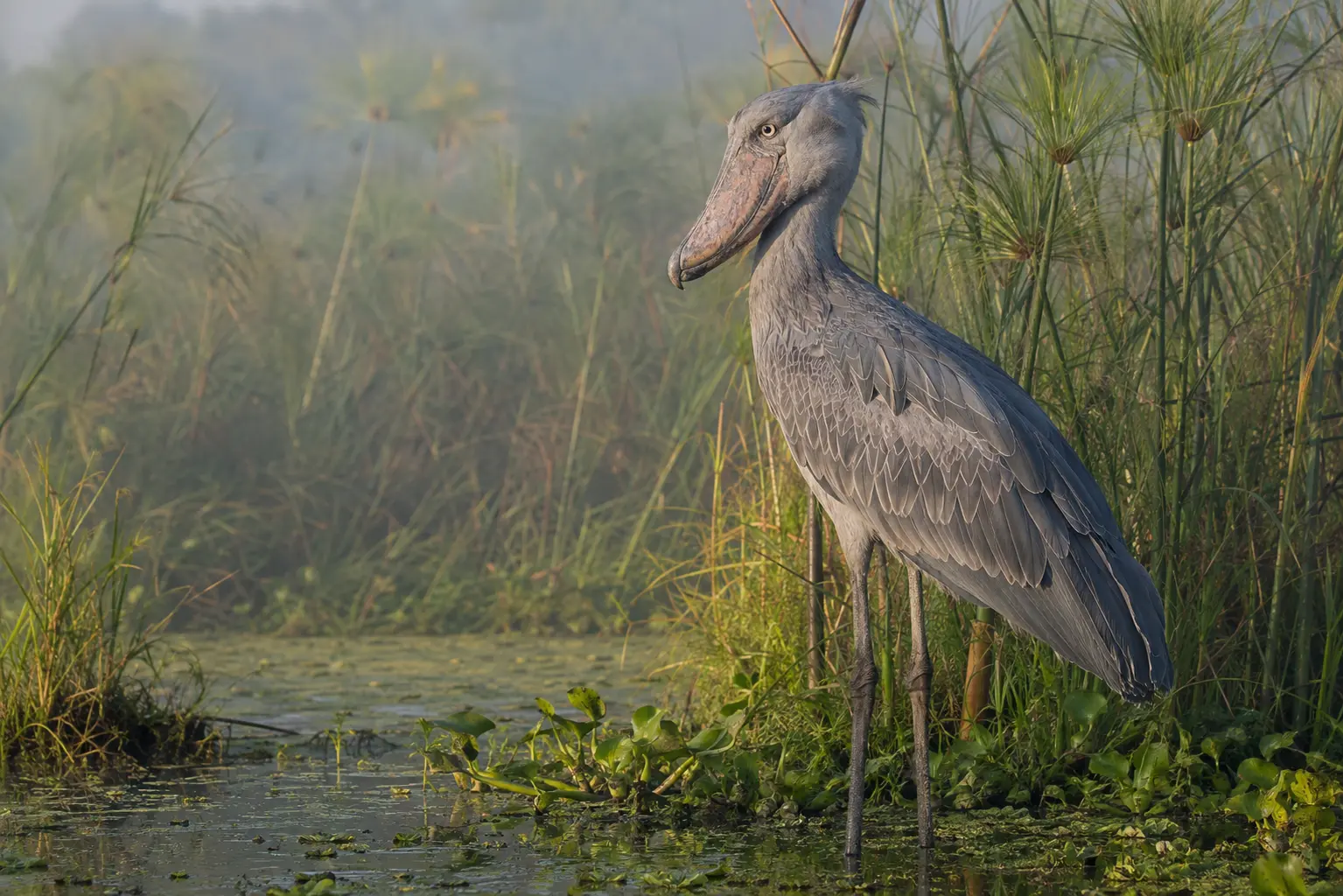
What you need to know
  • Many visitors who require a visa must apply online before travelling—use only Uganda’s official immigration portal.
  • A single-entry tourist visa currently costs US$50 and may be granted for up to three months; the approval authorisation must be used within 90 days.
  • Your passport bio-data page should show at least six months’ validity. Applications normally include a recent passport photo, itinerary or tour plan, and accommodation details.
  • Carry a printed copy of your visa approval letter, payment receipt, passport and the documents uploaded with your application.
  • A yellow-fever vaccination certificate is an entry requirement; confirm the latest health advice for your age and circumstances before departure.
  • Visiting Uganda, Kenya and Rwanda? The East African Tourist Visa currently costs US$100, is valid for 90 days, and must be issued by your first country of entry.
  • Visa-exempt nationalities should still verify the latest rules before booking. Fees and requirements can change.
Apply on the official visa portal
02TRAVEL GUIDE

Best Time to Visit

Uganda welcomes visitors year-round; the best months depend on the wildlife, scenery and pace you prefer.

What you need to know
  • June to September and December to February are generally the drier periods, popular for game drives, gorilla trekking and hiking.
  • March to May and October to November are usually wetter, bringing greener scenery, fewer visitors and dramatic photography—though some roads and trails can be muddy.
  • Gorilla and chimpanzee tracking operate throughout the year. Drier trails can be easier, but rainforest showers are possible in every month.
  • Birding is rewarding year-round. Migratory birds add variety mainly from November to April, while resident species can be seen in every season.
  • December to February and June to August are often the busiest travel periods, so permits and preferred lodges should be reserved early.
  • Uganda’s weather varies by altitude and region: Bwindi and the Rwenzoris can be cool and wet while the savannah parks are warmer.
03TRAVEL GUIDE

What to Pack

Pack light, but prepare for warm savannahs, tropical showers, forest trails and cool highland mornings.

What you need to know
  • Passport, visa approval, yellow-fever certificate, travel-insurance details and photocopies or secure digital backups.
  • Lightweight, breathable clothes in neutral colours; include long trousers and long sleeves for forest walks and evenings.
  • A light fleece or warm layer for early game drives and highland stays, plus a compact waterproof rain jacket.
  • Comfortable closed walking shoes with good grip; gaiters and gardening-style gloves are useful for gorilla trekking.
  • Wide-brimmed hat, sunglasses, high-SPF sunscreen and insect repellent. Ask a qualified travel-health professional about malaria prevention.
  • Binoculars, camera, spare batteries, memory cards, chargers, power bank and a Uganda-compatible Type G plug adaptor.
  • Personal medication in original packaging, a small daypack and a reusable water bottle. Check airline rules before packing liquids or batteries.
  • Avoid camouflage or military-style clothing. Soft-sided luggage is easier to handle on safari vehicles and small aircraft.
04TRAVEL GUIDE

Frequently Asked Questions

Quick answers about permits, transport, payments, health, safety and family travel in Uganda.

What you need to know
  • Do I need a gorilla or chimpanzee permit? Yes. Permits are limited and should be secured before travel, especially in peak months.
  • Can children join every activity? Family safaris can be designed for all ages, but primate tracking and some adventure activities have minimum-age rules.
  • How will we travel? Most custom safaris use a private vehicle with a professional driver-guide; domestic flights can shorten longer journeys.
  • What money should I carry? Uganda uses the Uganda shilling. Cards are accepted at many larger hotels, but cash is useful in rural areas; notify your bank before travelling.
  • Is tap water safe to drink? Use sealed bottled, filtered or properly boiled water and carry a reusable bottle where refills are available.
  • Do I need travel insurance? Comprehensive cover is strongly recommended, including medical treatment, evacuation, trip interruption and the activities in your itinerary.
  • What electricity is used? Uganda uses 240V electricity and Type G three-pin sockets; some remote lodges have limited charging hours.
  • Is Uganda safe for tourists? Travel with a reputable operator, follow your guide’s advice and check your government’s current travel guidance before departure.
Visit Uganda Wildlife Authority

CUSTOM TOUR ENQUIRY

Design my East Africa journey

Complete the details below and we will prepare a personalised itinerary for you.

1. Where and when?
2. Tell us about you
3. Shape your trip

International flights are not included. We will design the land portion of your journey around the information and budget you provide.

Your details will only be used to respond to your safari enquiry.

STORIES FROM THE PEARL

Learn before you travel.

Open these quick guides to understand Uganda’s wildlife, prepare responsibly and make your journey more meaningful.

01

Wildlife Story

Why Uganda’s mountain gorillas matter

Meet the great apes behind the cards and discover how responsible tourism can support their forest home.
Read the quick guide
  • Uganda’s mountain gorillas live in Bwindi Impenetrable and Mgahinga Gorilla national parks.
  • Every trek is led by trained guides and follows strict viewing rules designed to protect the gorillas.
  • Permit income supports conservation work and communities living near protected areas.
Explore Bwindi with UWA
02

Travel Checklist

Seven things to confirm before flying

A practical final check covering entry papers, health preparation, insurance, permits, money and luggage.
Read the quick guide
  • Confirm passport validity, visa or exemption status, and yellow-fever documentation.
  • Carry printed and digital copies of important travel documents and emergency contacts.
  • Verify primate permits, accommodation, airport transfer, travel insurance and any dietary or mobility needs.
  • Check airline baggage rules, especially for batteries, camera equipment and domestic flights.
Check official entry guidance
03

Conservation Explained

How a responsible safari helps protect nature

Your choices can support habitats, guides and neighbouring communities while reducing pressure on wildlife.
Read the quick guide
  • Use licensed guides and authorised park activities; never buy wildlife products or feed wild animals.
  • Keep a respectful distance, follow ranger instructions and avoid loud behaviour around wildlife.
  • Reduce single-use plastic, carry out waste and choose locally owned services where practical.
  • Ask before photographing people and support community experiences that protect dignity and culture.
Visit Uganda Wildlife Authority
04

Bird Spotlight

Meet Uganda’s unforgettable Shoebill

A patient wetland hunter whose enormous shoe-shaped bill makes it one of Africa’s most recognisable birds.
Read the quick guide
  • Shoebills favour freshwater swamps and papyrus wetlands, including Mabamba Bay near Lake Victoria.
  • They often stand almost motionless before striking fish and other wetland prey.
  • Quiet, community-guided boat visits help reduce disturbance and can support local livelihoods.
Open the Shoebill experience
05

Animal Spotlight

The Uganda kob: an emblem of the Pearl

Discover the graceful antelope represented on Uganda’s coat of arms and seen across several savannah parks.
Read the quick guide
  • Male Uganda kobs are recognisable by their ringed, lyre-shaped horns; females do not have horns.
  • They favour grasslands near water and can be seen in parks including Murchison Falls and Queen Elizabeth.
  • During breeding, males gather in display areas called leks where females select mates.
Discover Uganda’s wildlife

LEARNING THAT TRAVELS

Made for learning.
Created for everyone.

Uganda Wild Cards turn curiosity into discovery. Use them for quizzes, matching games, storytelling, safari challenges, research projects and conservation conversations—at school, at home or while exploring Uganda.

Teacher using Uganda Wild Cards with Ugandan students in a classroom
MADE FOR

Teachers & Schools

Bring wildlife lessons to life with ready-made material for quizzes, classroom discussions, research assignments, wildlife clubs and conservation projects.

Children learning about Ugandan wildlife and conservation together
MADE FOR

Children

Learn through play, discover remarkable species, compare animal abilities and grow proud of Uganda’s wildlife and natural heritage.

Family enjoying screen-free wildlife learning with Uganda Wild Cards
MADE FOR

Families

Create meaningful screen-free learning time and turn family safaris into exciting wildlife treasure hunts.

Tourist holding Uganda Wild Cards during a safari in Uganda
MADE FOR

Tourists

Carry Uganda’s story home, preserve your safari memories and introduce friends and family to the Pearl of Africa.

Collector displaying a complete collection of Uganda Wild Cards decks
MADE FOR

Collectors

Complete themed 52-card decks, trade duplicates and discover first-print, limited-edition and special collectible cards.

Shop or Order Internationally →

VOLUNTEER WHILE YOU VISIT

Share your time.
Learn from Uganda.

Uganda Wild Cards supports Trace Uganda, a Ugandan organisation working to empower street-connected children and youths. Through outreach, mentoring, education, creative learning and practical support, Trace Uganda helps young people recognise their abilities, rebuild confidence and move towards safer, more independent lives.

Tourists who would like to give a small part of their holiday can request a short, carefully planned volunteer experience. A few hours or one day can be meaningful when it strengthens an existing programme. Longer participation must be discussed and arranged before travel so that the visit responds to a genuine need rather than interrupting the young people’s routines.

UGANDA WILD CARDS × TRACE UGANDA

Tourism that gives something back.

Uganda Wild Cards connects wildlife education and responsible tourism with social impact. Visitors may help facilitate card-based learning, photography and storytelling, conservation awareness, sports, art or another activity that matches their skills and Trace Uganda’s current programme.

Volunteers do not replace trained social workers or make promises directly to children. Their role is to support locally led work, respect each young person’s dignity and leave behind knowledge, materials or encouragement that remains useful after the visit ends.

01

Purpose before photographs

Volunteering is not a sightseeing activity. Visitors should come ready to listen, work respectfully and learn from Ugandan staff and communities. Photographs, videos and personal stories may only be taken or shared with proper permission.

02

Children come first

Anyone working near children must follow safeguarding instructions. Volunteers are supervised, are never promised unsupervised access to children and may be asked for identification, references or a background check depending on the activity and length of placement.

03

Plan before arrival

Availability is not guaranteed. Tell us your dates, skills, interests, age and how much time you can offer. We will explain the proposed activity, location, transport, dress, conduct and any programme contribution before you decide.

04

Travel responsibly

Volunteers remain responsible for visas, insurance, vaccinations, accommodation, meals and personal expenses unless a written arrangement says otherwise. A tourist or visitor visa may not permit every kind of work, so we confirm the appropriate arrangement before participation.

A MEANINGFUL ADDITION TO YOUR JOURNEY

Tell us what you can share.

Send your travel dates, profession or skills, preferred activity and available hours. Uganda Wild Cards, Muzunguka Safaris and Trace Uganda will reply with a suitable, safe and realistic opportunity if one is available.

Ask About Volunteering →francis@ugandawildcards.com
1

ONE WEBSITE · ONE JOURNEY

Products and experiences,
beautifully connected.

Most souvenir shops sell products, while most tour companies sell experiences. Uganda Wild Cards brings both together: someone who buys a card can become a safari guest, and every safari guest can take the cards home as lasting souvenirs.

Uganda Wild Cards is the single education, collectibles, shopping and tourism platform. Muzunguka Safaris remains the registered company operating all tours, bookings and travel packages.

Uganda Wild Cards is a proudly Ugandan initiative and tourism platform operated by Muzunguka Safaris.One website, one WhatsApp number, one booking journey and one clear purpose: Collect Uganda. Explore Uganda.
Kisakye Francis, Founder and CEO of Uganda Wild Cards
MEET THE FOUNDERKisakye FrancisFounder & CEO

My journey into tourism began in 2005 at Retrak, an organisation where I was first a beneficiary and later became a volunteer. Having experienced the organisation’s support personally, volunteering gave me an opportunity to give back, rebuild my confidence and help others facing difficult circumstances. I was frequently entrusted with welcoming volunteers from the United Kingdom and guiding them through Kampala’s informal settlements, local communities and other places of interest. Friends soon began calling me a tour guide, and what started as a simple responsibility gradually grew into a genuine passion for tourism.

Even as I continued dedicating my life to supporting vulnerable and street-connected children, my interest in tourism remained strong. Over the years, I developed a deeper appreciation for Uganda’s extraordinary wildlife, breathtaking landscapes, diverse cultures and welcoming people. This passion eventually inspired me to establish Muzunguka Safaris and later create Uganda Wild Cards—an innovative platform bringing together tourism, education, conservation and social impact.

My vision is to help people from Uganda and around the world discover the beauty and richness of our country while using tourism to create meaningful opportunities for others. Through Uganda Wild Cards, I hope to promote domestic and international tourism, encourage wildlife conservation and support the empowerment of street-connected children and youths. For me, every journey should offer more than beautiful memories—it should also contribute to a better future.

Created with pride in Kampala, Uganda.

THE PEOPLE BEHIND THE JOURNEY

Meet our team.

Our team brings together local knowledge, international experience, visual storytelling and a shared respect for East Africa’s wildlife, landscapes and communities.

Kisakye Francis, Founder and CEO
FOUNDER & CEO

Kisakye Francis

Francis’s journey into tourism began in 2005 at Retrak, where he moved from being a beneficiary to volunteering and welcoming visitors from the United Kingdom. Guiding them through Kampala’s informal settlements, local communities and places of interest awakened a passion for sharing Uganda with others. While continuing his lifelong work with vulnerable and street-connected children, he developed a deeper appreciation for Uganda’s wildlife, landscapes, cultures and people. He later established Muzunguka Safaris and created Uganda Wild Cards to bring together responsible tourism, wildlife education, conservation and social impact. His vision is for every journey to reveal the beauty of Uganda while creating meaningful opportunities for street-connected children and youths.

Peter Hogel, Wildlife Photographer and Consultant
WILDLIFE PHOTOGRAPHER & CONSULTANT

Peter Hogel

Peter is a Swedish professional photographer with more than three decades of experience, having operated his own studio in Sweden before closing it and making Uganda his permanent home. His work spans African landscapes and wildlife, with a particular passion for macro photography and the remarkable world of insects. Drawing on extensive travel and safari experience across Uganda and Tanzania, Peter helps visitors appreciate East Africa’s national parks, biodiversity and natural beauty through a photographer’s eye. He has also supported wildlife-conservation initiatives and photography exhibitions in Kampala, including charitable efforts connected to Ziwa Rhino Sanctuary. Peter brings technical expertise, visual storytelling and a deep commitment to conservation to the Uganda Wild Cards and Muzunguka Safaris team.

Michael J. Kagoro, Senior Tour Manager
SENIOR TOUR MANAGER

Michael J. Kagoro

Michael brings over twelve years of experience in Uganda’s tourism and hospitality industry. With extensive knowledge of the country’s national parks, wildlife, cultures and leading attractions, he oversees tour planning and operations to ensure that every journey is safe, well organised and memorable. Known for his professionalism, attention to detail and warm approach to guests, Michael works closely with travellers, guides and service providers to create seamless safari experiences. His passion for showcasing Uganda’s natural beauty and cultural heritage makes him a valued member of the Uganda Wild Cards and Muzunguka Safaris team.

ON THE GROUND

Our safari guides.

Below the three senior team profiles, our professional guides will be introduced with their specialist knowledge, languages, destinations and guiding experience.

FIRST EDITION

Take Uganda’s wild
wonder with you.

Join the early-interest list for launch news, school packages, wholesale enquiries and first-edition availability.

We’ll only contact you about Uganda Wild Cards.
WhatsApp